
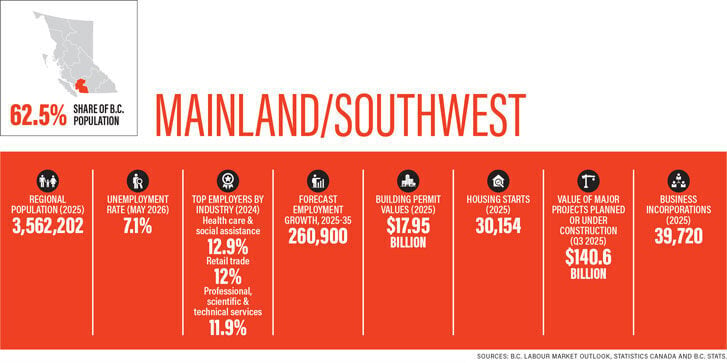
After three decades of almost uninterrupted growth, B.C.’s Lower Mainland and its centre of Vancouver is taking stock. Representing more than half the province’s population and economic activity, the region has seen an explosion of new industries, elevated immigration, non-stop construction and global recognition evidenced in events including this year’s Web Summit and FIFA World Cup.
Government measures to address the rising cost of living, including tighter immigration limits, combined with higher interest rates has slowed the pace of growth, however. And like much of Canada, the Mainland Southwest region has been affected by the United States’ recent trade policy, with its imposition of new tariffs. The pause has given Lower Mainlanders the opportunity to think more closely about the kind of region they want to nurture going forward.
In some instances that means preserving a sense of the region’s past. For years, Chilliwack city council, along with the city’s economic development arm, Chilliwack Economic Partners Corp. (CEPCO), has been striving to revitalize the Fraser Valley city’s downtown, going so far as to buy properties of historic importance for restoration. This year, CEPCO unveiled the revived Skelton Building, home to an iconic menswear store for most of the past century. Today, there is a small museum on the site of the store. The building’s anchor tenant is Amato Trattoria, an Italian restaurant. Nearby is District 1881, a pedestrian-oriented shopping and dining district complete with loft-style apartments in historic buildings.
“Over the past five years, CEPCO has made painstaking efforts to preserve many of the historic features of the Skelton Building,” says Brian Coombes, CEPCO president. “Original features have been saved, such as a large skylight, exterior leaded glass, an exposed timber ceiling and, of course, the inlaid Skelton’s floor tile.”
Welcoming and working for investment
In this and other ways, competition among Lower Mainland municipalities—there are more than 20 in Metro Vancouver alone—has become more pointed in recent years, to the benefit of residents, visitors and businesses. In 2025, commercial real estate development association NAIOP Vancouver recognized Surrey for doing the best job in controlling its fees, Mission for reducing its average development approval time by 38 percent and Chilliwack for being the most business-friendly of 15 cities surveyed.
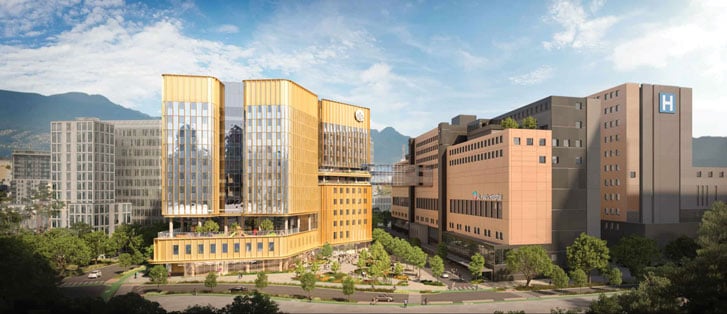
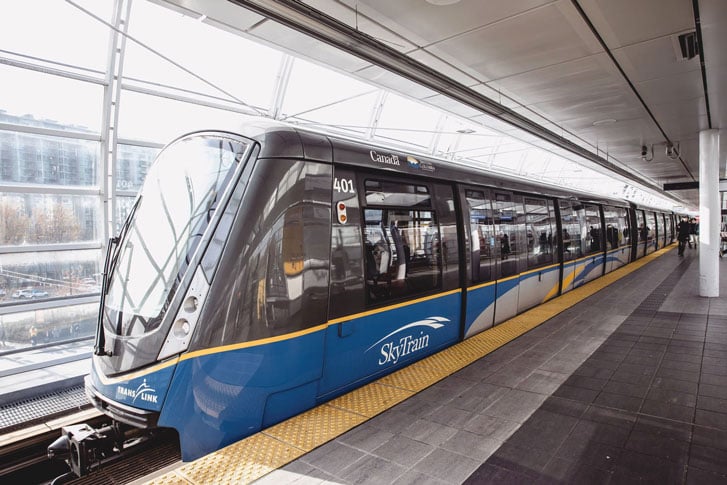
City of Vancouver staff have proposed a series of measures to cut costs for the real estate development industry, which has been hit hard by interest-rate increases and slowing housing demand since 2022. Still, there are pockets of activity. Some 30 hotel projects are in various stages of development. The new, $2.2-billion St. Paul’s Hospital is stimulating commercial and residential development in the surrounding False Creek Flats area. And the pending completion of the Broadway SkyTrain extension to Arbutus Street in 2027 is stirring construction and transactions along that corridor.
Surrey city council has approved plans for an entertainment district anchored by a 10,000-seat arena and 100,000 square feet of commercial space. The suburb is projected to overtake Vancouver as B.C.’s most populous municipality in 2027, with more than 700,000 residents.
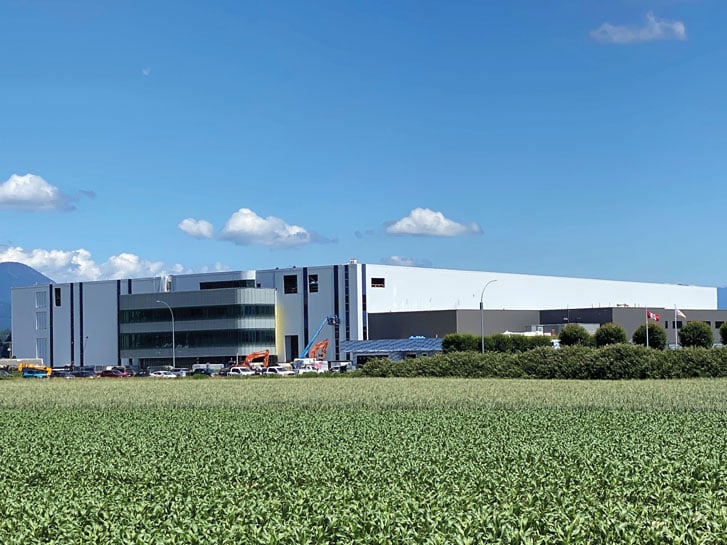
Maple Ridge is working on a plan to add a new, 600-acre industrial zone to the maxed-out industrial space in Metro Vancouver. Abbotsford, which late last year adopted a new official community plan, has two industrial projects under construction: the 140-acre Xchange Business Park and the 260,000-square-foot Riverside Industrial Park.
On the international map
Invest Vancouver, the metropolitan region’s economic development agency, announced last fall that it had boosted the number of foreign companies it is in talks with by 61 percent year to date. Thirty percent of those companies came from Europe and 25 percent from Asia, the agency said. Seventeen percent came from the U.S. and 15 from the rest of Canada. If all these leads were realized, it would result in $4.4 billion in new investment and more than 3,000 new jobs.
Past research by Invest Vancouver indicated that foreign firms are responsible for 231,000 jobs in the region. For example, Norwegian firm Elywhere is investing $50 million in a plant in Surrey that manufactures electric vehicle charging stations. South Korea’s BeroAI opened a Vancouver office last year to develop an AI solution helping owners communicate with their pets.
Vancouver ranks among the top 10 most competitive North American technology hubs, according to office leasing company CBRE. The firm’s Scoring Tech Talent report, released in September 2025, said the city ranked 12th in sheer size, with 125,100 skilled workers. But it also boasted the third-highest “tech talent concentration,” behind San Francisco and Seattle. Vancouver is a good value for employers, the report said, with moderate wages and high labour quality.
The list of technology and technology-enabled companies receiving venture capital financing over the past year tells the story: quantum computing company Photonic raised $180 million; last-mile delivery company UniUni raised $85 million. In many cases, venture capital went to companies that span the divide between technology and resources. Mangrove Lithium, which this year was named to the prestigious Global Cleantech 100 list, secured US$85 million toward building a first-of-its-kind lithium refining facility in Delta. pH7 Technologies received $80 million in two tranches to commercialize its solvent-based technology for extracting critical metals (as an alternative to traditional smelting).
The past year saw Metro Vancouver cement its reputation as a centre for visual effects for the film and gaming industries. Netflix opened a 110,000-square-foot animation studio employing 450 staff, Industrial Light & Magic opened a 40,000-square-foot studio to help house its 950 local workers and Sony Imageworks established a global headquarters in The Post building also occupied by Amazon. Multinational software developers like Workday, Asana, Autodesk, Boomi, Gumloop and Quandri all expanded their presence in the city, along with AI specialists Databricks and Wayve.
On the life sciences front, this year saw the opening of the adMare M4 Innovation Centre in Vancouver’s Mount Pleasant neighbourhood, a 30,000-square-foot laboratory space for emerging biotech companies to test out their discoveries. Further along the technology development pipeline, Aspect Biosystems attracted $280 million for its bioprinted medicine platform targeting diseases including diabetes. And the federal government this year awarded Providence Health Care with $48 million from its Strategic Response Fund toward its Clinical Support and Research Centre at St. Paul’s Hospital—an effort to bridge the divide between technology development and trials in a clinical setting.
Connected to the world
Since the arrival of the Canadian Pacific Railway in 1886, Vancouver has been one of Canada’s busiest harbours and now accounts for about half the country’s overseas merchandise trade. The port handled 170.4 million tonnes of freight in 2025, surpassing the previous record volume set in 2024 by almost 8 percent. The vast majority of that—147 million tonnes—represented foreign trade, of which three-quarters was with Asian trading partners. The port also saw 300 cruise ship sailings and 1.2 million passengers pass through.
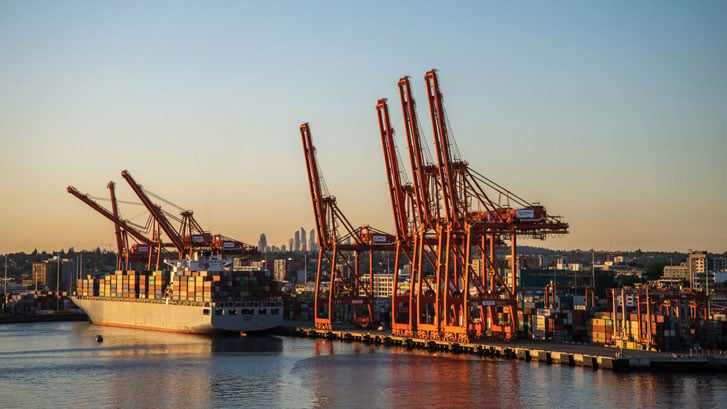
“As Prime Minister [Mark] Carney looks to double exports to non-U.S. markets in the next decade, the Port of Vancouver is playing an outsized role in delivering more made-in-Canada products to more customers globally,” Vancouver Fraser Port Authority president and CEO Peter Xotta said in March.
And, speaking of passengers, Vancouver International Airport hosted 26.9 million guests last year, topping the previous record set in 2019. It serviced 57 airlines flying to 129 non-stop destinations around the world. Air cargo numbers also rose to 365,000 tonnes. By sea, by air and by land, the Mainland Southwest remains the B.C. economy’s crossroads.