

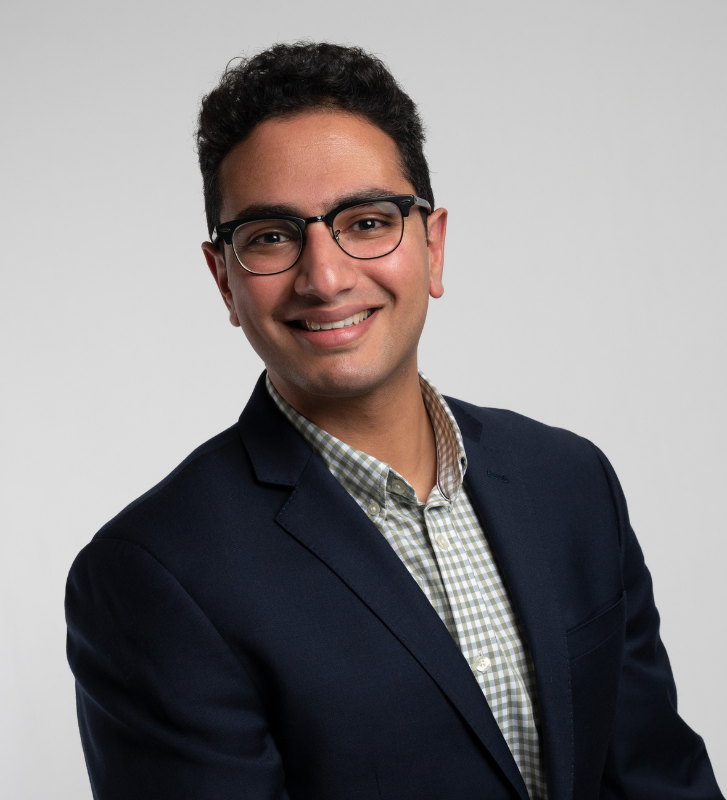
Technically, Vancouver’s Aspect Biosystems uses proprietary AI-powered bioprinting technology to create “bioengineered cellular medicines.” Or, as the company puts it in different words, it’s “3D printing living human tissues.” Or, as co-founder and CEO Tamer Mohamed often hears it at home: “My daughters like to say I create body parts for a living.”
That last one is not totally accurate—but, hey, who are we to argue with kids? Plus, as Aspect is a wildly complex business on the cutting edge of Canadian bioscience, it’s not easy to describe what it does out of its Mount Pleasant headquarters.
It is, however, easy to describe Aspect’s success.
Based on graduate research that began at UBC in 2011, the startup, which was founded in 2013, has exploded into a firm with more than $500 million in capital investment, 130 employees and a major $2.6-billion partnership with pharmaceutical giant Novo Nordisk to create cellular treatments for Type 1 diabetes.
In April, the federal government launched a $280-million project with Aspect to support expanded clinical development and to “reinforce the country’s leadership in Separately, the B.C. government contributed $23.8 million in 2024 as part of a broader $200-million partnership between Aspect and the provincial and federal governments.
“We have everything we need to go the distance,” says Mohamed, who, at 37 years old, was named to Vancouver magazine’s Power 50 list this year.
“What we have needed more of, that has prevented us from getting there as a country, quite frankly, is ambition and a long-term view. That’s something we’ve had from the beginning and it’s great to see now, in this really defining moment for our country, that we’ve really scaled the ambition to new heights.”
UBC played a big role in the company’s inception. It was there that Mohamed and co-founder Simon Beyer were conducting graduate research in engineering and 3D printing under the supervision of their principal investigator, Konrad Walus. Soon, the university’s entrepreneurship program connected the three engineers with cell biologist Sam Wadsworth from St. Paul’s Hospital. Suddenly, the collective came up with a medical application for their work. The “geeks at heart,” as Mohamed describes the foursome, have eschewed the typical co-founder friction found in many startups, and remain close 15 years later.
Aspect takes human stem cells, programs them to become different cell types, and then applies its technology to protect them from rejection when implanted back into the human body.
“Almost imagine a fighter jet going undetected from radar systems because we’ve created the conditions to allow for that fighter jet to not be detected,” says Mohamed. “We implant them into the body and keep them there happy and alive so they function. We have to essentially prevent them from being attacked by the immune system.”
In Type 1 diabetes, the body destroys insulin-producing islet cells that come from the pancreas, requiring a person to inject themselves daily with insulin. Aspect says its 3D-printed cells are capable of recognizing glucose and releasing insulin, replacing that lost function. “You can think of these as restorative, cellular medicines inside the body,” says Mohamed.
The next step is clinical development. The federal government is supporting that work through a partnership focused on accelerating Aspect’s clinical development programs and strengthening its biomanufacturing capabilities to give the country an edge in this area of life sciences. There are other competitors in the field, including Ontario-based Sernova Biotherapeutics and Victoria’s VoxCell BioInnovation—but they use different techniques, and are at different stages of development.
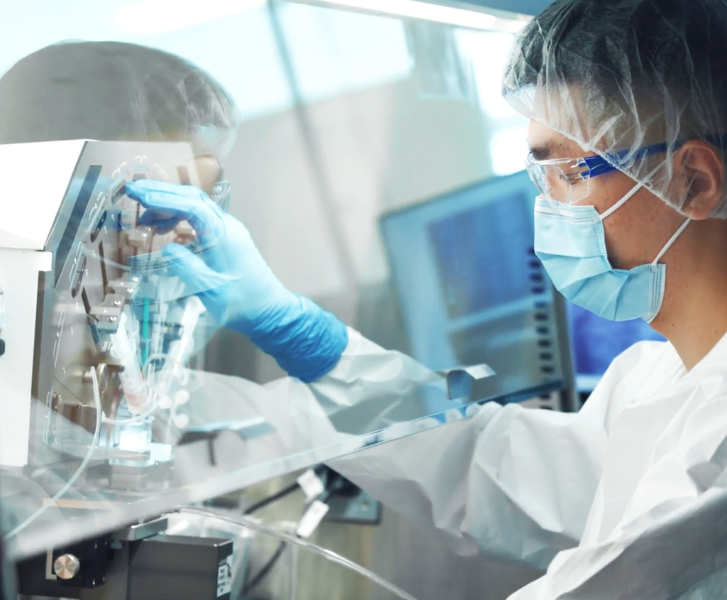
Aspect’s deal with Denmark-based Novo Nordisk gives the company access to key stem cell and hypoimmune cell engineering technologies, with Aspect leading development, manufacturing and commercialization efforts under the partnership.
The Novo partnership is meaningful, says Mohamed, because of Canada’s history of discovering insulin in the 1920s. A Danish researcher took that work to create what is today Novo Nordisk. Now, with a potential bioengineered cure for diabetes by another Canadian in partnership with Novo, it’s a “full-circle moment,” he says.
Mohamed, who was born and raised in Canada, says he is proud to be helping the country lead in this area and intends to keep his firm headquartered in Vancouver as it grows. “I really think life science and biotech is Canada’s industry to own,” he says. “What has been missing is that necessary ambition to just totally own these categories we initiate and discover, and that’s something we have at Aspect. We’re relentless in our pursuit. And in many ways we’re being a bit un-Canadian to think we’ll get to where Canada ought to get to.”