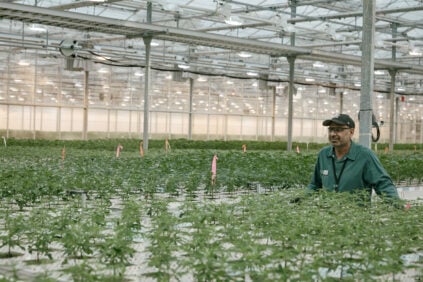

On a bright, sunny afternoon on the farmlands of Delta, the first thing that hits me isn’t the sight—it’s the smell. Thick, pungent and musky, the unmistakable aroma of cannabis is strong in the air long before the greenhouses come into view. Once I’m inside one of the world’s largest cannabis production facilities and one of BCBusiness’s Top 100 winners this year, Village Farms International (formerly known as Pure Sunfarms), the scale reveals itself slowly, then all at once.
View this post on Instagram
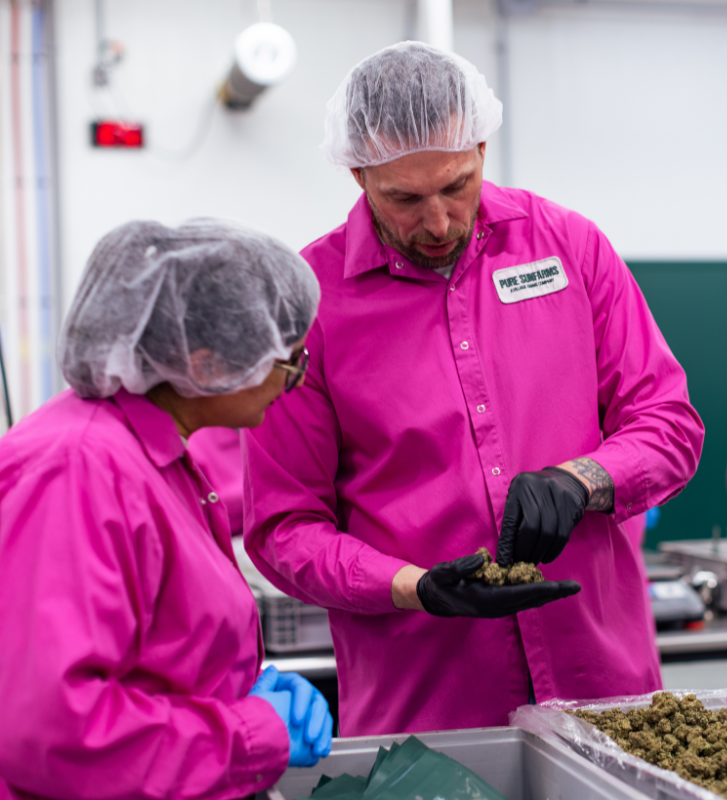
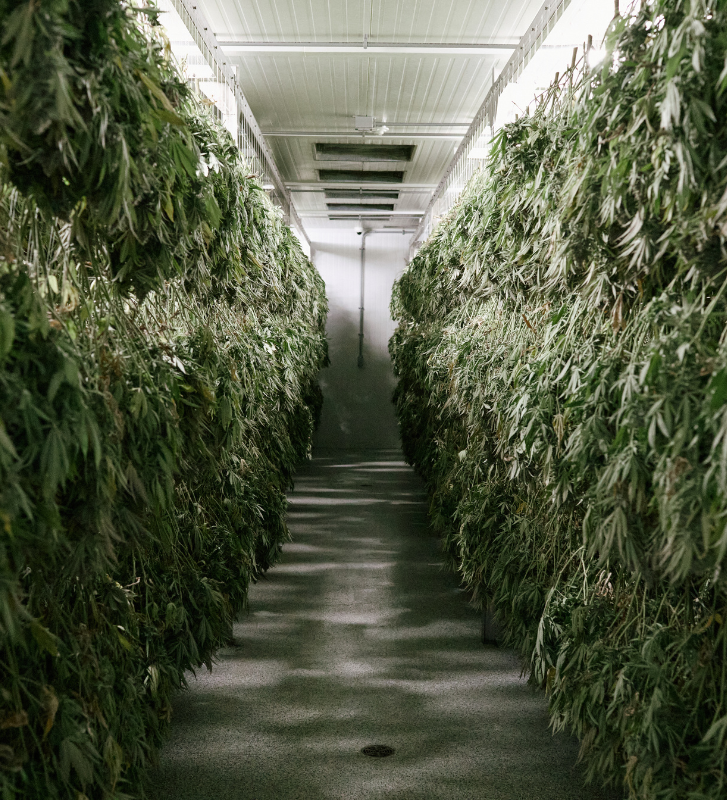
Over the next two hours, I’m led through corridors and cultivation rooms where rows of uniform, waist-high cannabis plants stretch for acres. Punjabi music blasts in the background as workers trim and sort with quiet precision. In drying rooms, the air grows even heavier and more potent, with thousands of plants hanging in carefully spaced rows.
The scale is staggering—but, as VFI’s global president of operations, Orville Bovenschen, tells me, it’s no longer the whole story. Across the street from the primary facility, an additional 550,000 square feet of greenhouse space is taking shape—quiet for now, but central to the company’s next phase. Unlike the existing facility, this expansion supports cultivation for both domestic and international markets, a response to what the company describes as surging global demand.
The shift is already showing up in the numbers. By the end of 2025, the company’s export volumes had jumped by more than 500 percent, with key markets including Germany, Australia, the United Kingdom, New Zealand and Israel—shipments that leave Canada by air freight, with the purchasing companies typically taking possession at the airport. Total cannabis sales in 2025 reached roughly US$188 million, with international exports accounting for US$37.9 million, or just over 20 percent of revenue.
Village Farms International is just one of the many licensed cannabis producers across the province now looking beyond Canada’s borders for growth. At home, the economics have grown increasingly unforgiving: high excise taxes, complex provincial regulations and a stubbornly resilient illicit market continue to squeeze margins and erode market share. Abroad, by contrast, emerging medical markets—combined with the global cachet of “B.C. bud,” long associated with quality and craft—are opening up new paths to profitability. For many B.C. producers, exports are no longer a side bet—they’re fast becoming the main strategy.
Walker Patton, co-founder of the BC Cannabis Alliance, which represents about 50 licensed producers across the province, believes one of the biggest drivers behind the industry’s pivot to exports is the domestic regulatory burden. “With the rules that this industry was set up with, it’s like playing business on the maximum difficulty mode right out of the gate,” the industry advocate says.
At the centre of that challenge is Canada’s excise tax structure. Duties are levied by weight rather than by actual market price, meaning that even as wholesale prices drop (as they have, to roughly half of initial projections), the tax burden to growers remains largely unchanged—pushing effective rates higher and margins lower. VFI’s Bovenschen echoes the strain: “If you see how much we paid in excise tax last year, it’s an astronomical amount.” (VFI declined to provide actual excise tax figures.)
In B.C., additional layers compound the pressure. Even under the province’s direct delivery program—intended to give producers more control over distribution—companies must still remit a 15 percent wholesale fee to the province. For many operators, that fee functions less like a service charge and more like another tax, further eroding already thin margins.
For some B.C. producers, these pressures have already forced hard decisions. Sweetgrass Cannabis, an independent, locally owned micro-cultivator based in the Kootenay region, recently pulled back from selling to provinces like Ontario and Alberta after finding the math untenable. “Margins, not just export opportunity, drove our decision,” says chief operating officer Gemma Hayes. High wholesale markups—as high as 25 percent in Ontario—layered with excise taxes left little room to operate, while intense competition fuelled what Hayes calls a “race to the bottom.”
Today, medical cannabis exports make up the majority of Sweetgrass Cannabis’s business, with roughly 60 to 70 percent of sales coming from international markets. Key markets include Germany—its largest—alongside Israel and Australia, while the firm is exploring entry into the United Kingdom.
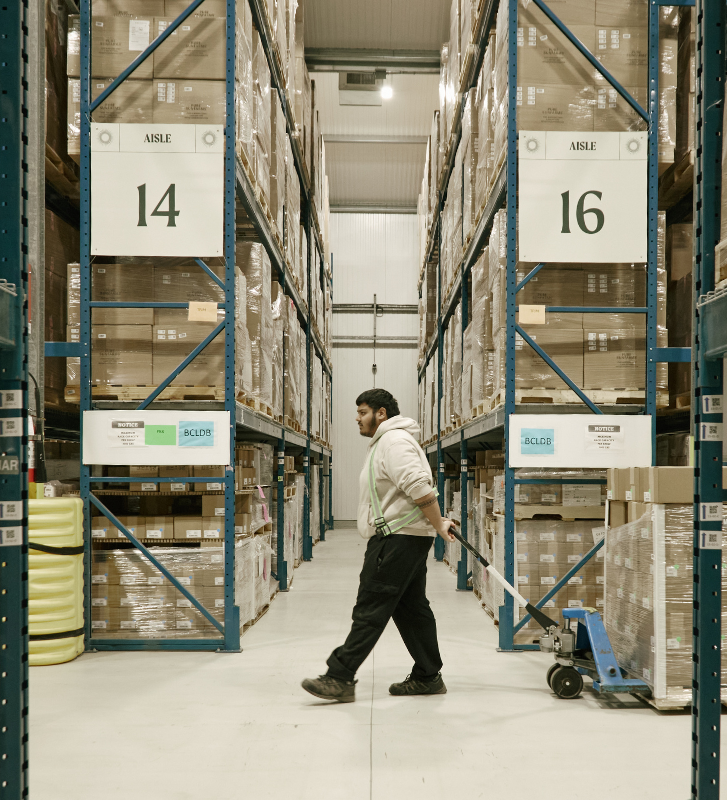
Another big draw of going international is scale. Exports are largely a volume play: a single shipment—around 200 kilograms—can move through markets like Germany in six to eight weeks, driven by a larger consumer base and more concentrated demand than in Canada. Hayes adds that relatively few craft producers are equipped to export, resulting in less competition in the premium segment of the international market where Sweetgrass positions itself.
Like Sweetgrass, Vancouver-based, publicly traded Rubicon Organics—a leading supplier of premium-market cannabis in Canada and B.C.—entered some international markets last year, driven by “a business decision to diversify revenue outside of Canada and capture highly profitable sales opportunities,” according to VP of marketing and new business Mathieu Aubin. The company—which recently opened a new, 47,500-square-foot facility in Hope (partly to fulfill overseas demand)—has begun shipping to the U.K., Australia and Germany, and is eyeing Poland.
In a Zoom call from this year’s International Cannabis Business Conference in Berlin, Aubin stresses Canada’s—and B.C.’s—early-mover advantage in the global cannabis landscape. “Canada is very well positioned when it comes to trusted, safe cannabis going to international markets,” he says, noting that in medical markets, reliability and product integrity are paramount. While lower-cost producers in emerging regions like Thailand, South Africa and Colombia are scaling up, Canada’s reputation for quality continues to set it apart. Unlike many of B.C.’s small-scale producers, which struggle to deliver quality at scale for export, Rubicon Organics appears to have cracked the code.
In practice, however, that export pathway tends to favour producers with the infrastructure to meet strict international requirements. Salt Spring Island–based outdoor cultivator Good Buds illustrates this challenge. Co-founder Alex Rumi says the company’s biggest hurdle is that many established export markets—including Germany, Australia and Israel—are structured around an indoor, pharmaceutical-style model that tends to view sun-grown cannabis as a lesser category. Fulfilling a typical export order of around 50 kilograms would consume a significant share of Good Buds’ small annual indoor production, making the market logistically difficult to pursue at scale. It’s evidence, he says, that Canada’s export system “works for large producers and doesn’t work for craft.”
For all the promise of international markets, breaking in is far from straightforward. Julia Cameron, president of the Cannabis Cultivators of B.C. and VP of communications and corporate affairs at Village Farms International, says exports remain burdened by administrative and regulatory complexity. Under the current export permit model, producers must secure permits for every shipment while navigating a patchwork of rules across countries—many of which are still building out their medical cannabis systems. That means getting up to speed on import processes, testing requirements and local partnerships in each market. For smaller producers, in particular, that work can be prohibitive, creating a high barrier to entry even as global demand grows.
If the path outward is complex, the upside could be transformative. British Columbia is a national leader in cannabis production, home to more than 200 licensed producers and responsible for roughly a quarter of Canada’s legal output. Yet that strength hasn’t fully translated abroad: the province accounts for just 14 percent of national exports. Recent moves—like shifting the cannabis file under the Ministry of Agriculture and Food—have begun to open doors to export funding and support programs. Still, as Lana Popham, B.C.’s minister of agriculture and food, tells BCBusiness, “There’s a lot of potential to come.”
Pointing to the FIFA World Cup matches in Vancouver, Popham notes the influx of international visitors—many of whom may be unfamiliar with legal recreational cannabis. “It’ll be interesting to see how many people engage with what is an excellent product here in B.C.,” she says, adding that the province will be watching closely to see whether that exposure translates into increased demand.
Meanwhile, producers and sector leaders are pushing for British Columbia—beyond just Canada—to establish its own identity on the global stage. Walker Patton argues that while the province already holds a distinct edge in quality, technique and culture, realizing its full economic potential will require treating cannabis as an industry to support, not to suppress. Patton also points to a less obvious advantage: because Canada cannot legally export cannabis to the U.S., the sector is largely insulated from American tariff disputes and trade volatility. With a supply chain that is primarily domestic, and the U.S. still federally prohibiting cannabis, Canadian producers have had a head start in building relationships and infrastructure for the global market.
Patton confirms that B.C.’s reputation is already resonating abroad, with international buyers touring regions like the Kootenays and returning home as ambassadors for our product. It’s why leaders like Julia Cameron are calling for a formal “B.C.-grown” designation—one that could codify the province’s reputation for premium cannabis and help it stand out globally. The opportunity is clear—now it’s a question of whether B.C. can move fast enough to turn that edge into global market share.