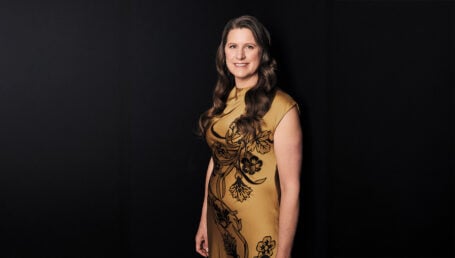

Gillian Vandermeirsch wants us to think about cannabis the same way we think about wine. When buying a bottle, consumers typically don’t fixate on alcohol percentage—they might consider the grape, the region, the flavour profile and the overall experience.
Cannabis consumption, she argues, deserves the same level of sophistication.
Today, most cannabis products in Canada are sold with a single metric front and centre: THC percentage—the psychoactive compound responsible for the “high.”
“It’s created a dynamic where consumers can’t engage with the product directly—they’re relying on a single number to guide their decision,” Vandermeirsch explains.
In the process, much of what defines the product gets lost. Important qualities like the aroma, bud structure, stickiness and colour are flattened into a single percentage point. Two products with the same THC level, she notes, can produce entirely different experiences.
Vandermeirsch was among the first in Canada to challenge that system with data. In a 2025 peer-reviewed study, she and her team found that THC levels can vary significantly—not just between batches, but also within a single plant. The implication is simple but powerful: one number cannot accurately represent a biological product at scale.
Rather than leaving the finding in a journal, she brought it to market. At Pure Sunfarms (a subsidiary brand under Village Farms International), Vandermeirsch led the introduction of THC potency ranges on product labels—grounded in data from hundreds of batches—to give consumers a more accurate picture of what they’re buying. The shift isn’t just about transparency and education, it’s also about safety. Unlike alcohol, where people have a clearer sense of how much they can consume and still function, cannabis dosing is less intuitive—especially when the labelled percentage doesn’t always reflect the full range of potency. By introducing ranges, she says, consumers can better account for that variability and make more informed decisions.
Next, Vandermeirsch is focused on unpacking the science behind the “entourage effect”—the proposed theory that while THC drives the high, it interacts with other compounds in the plant, such as terpenes (important contributors to aroma and flavour) and minor cannabinoids (compounds other than THC and CBD) to shape the overall experience.
What is the last book you read?
Never Split the Difference by Chris Voss.
What was your first job?
Working for a pet groomer.
What is your go-to reset ritual?
“Being out with my dog in the forest.”