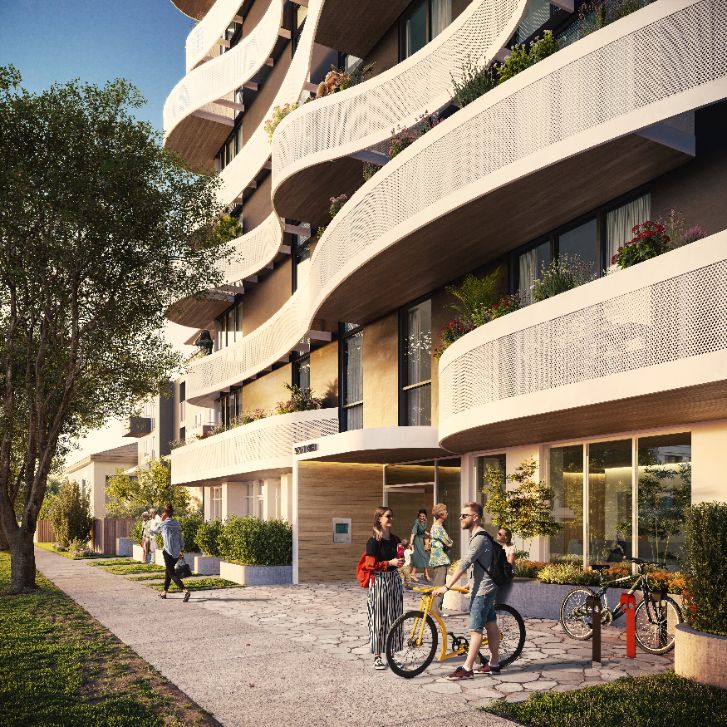

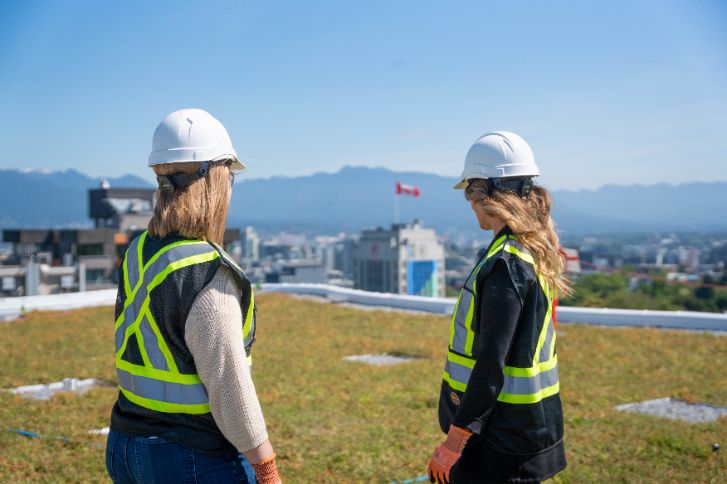
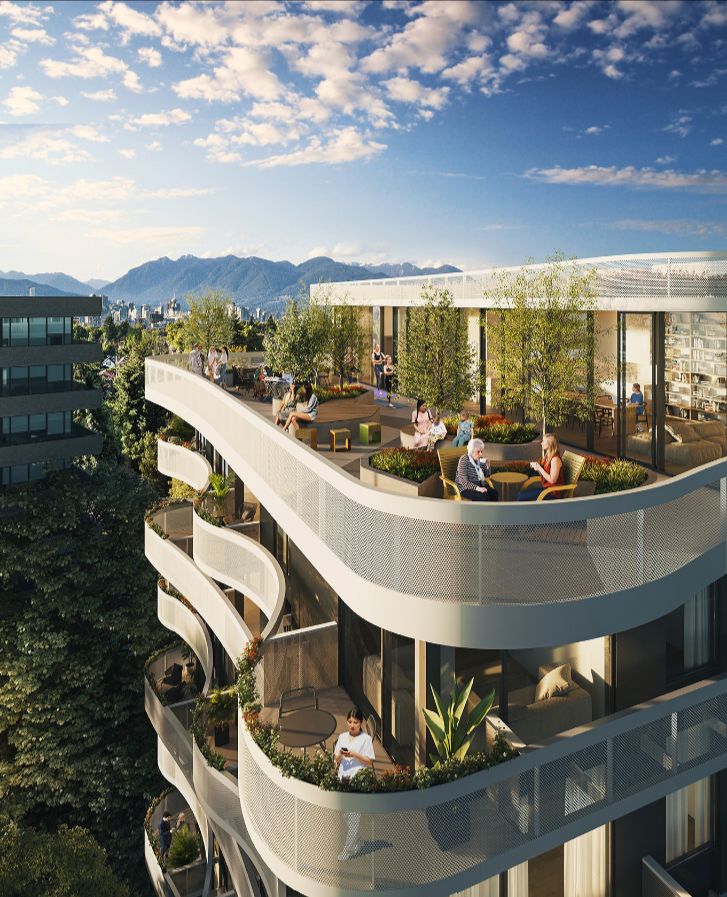
An affordable housing development, conceived, led and delivered by women, has community at the heart of its design. From the rooftop of Soroptimist House, residents can look out toward the North Shore mountains. The shared space, part of a project owned by Soroptimist International of Vancouver, is intended for gatherings and casual conversations between neighbours.
The Property
Type: Apartment
Neighbourhood: Cambie
Units: 50 studios, 38 one-bedroom units, 35 two-bedroom units, and 12 three-bedroom units
Expected completion: Late August, 2026
Parking: Garage, Underground
Rent per unit: range from $500 (for studios) and $3,220 (low end of market, 3 beds)
Soroptimist International of Vancouver is a nonprofit organisation whose mission is improving the lives of women and girls through education, scholarships and awards. The 13-storey tower replaces an aging two-storey building that previously housed 21 senior women. Rather than simply rebuilding, the project team began by asking those residents what they wanted from a future home. They found the answers were largely about connection.
“There are spaces intended to foster that community, connection and social interaction intentionally woven all throughout the building for the residents,” says Carla Guerrera, founder and CEO of Purpose Driven Development, the development lead and financing lead for the project and 2025 BCBusiness Women of the Year winner. The design includes spaces that can be used for “events, workshops for financial literacy, space for yoga and meditation, birthday parties, and maybe some co-working space for the single-moms and workforce women who are going to live here.”
The Development
Those conversations with the previous tenants also influenced other areas of the building. Laundry rooms were designed as places where neighbours might naturally cross paths. The lobby intended to function more as a communal living room than a simple entrance. Shared spaces were prioritised throughout the building to help combat the isolation that can affect seniors living alone and single-mother households.
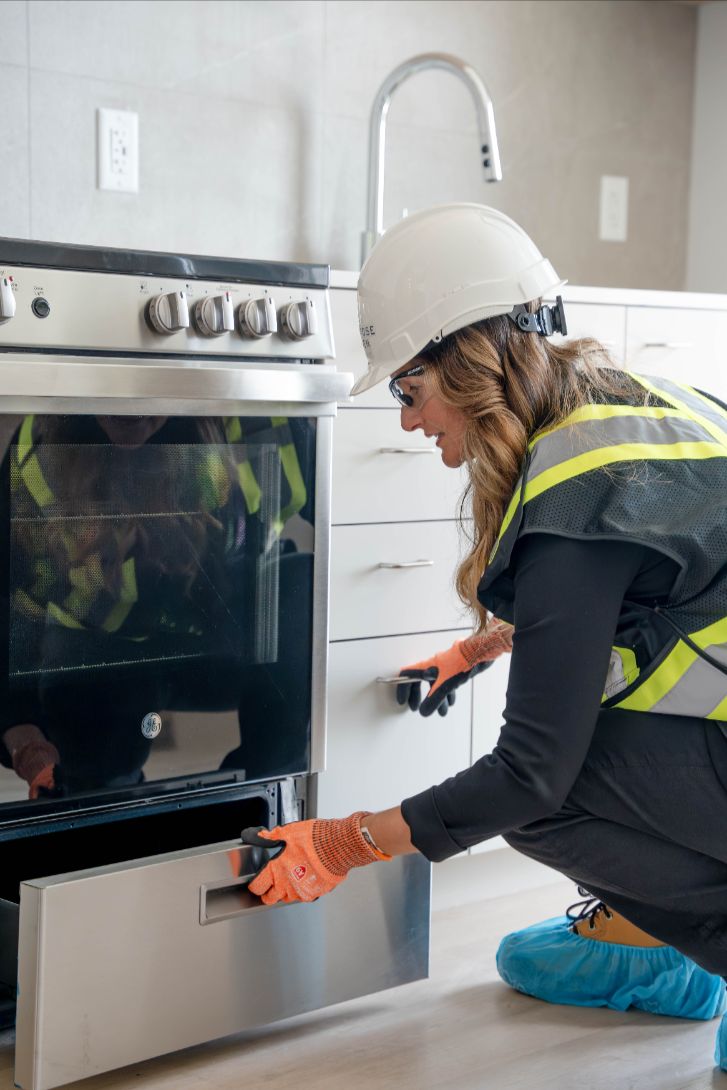
Soroptimist’s mission also shaped the development process itself, as the organisation was intentional about creating opportunities for women across design, development and construction teams.
However, the project did face its share of challenges almost from the moment excavation began as the site revealed hard ground conditions. Contaminated soil, though common on urban Vancouver sites, became an even larger issue when provincial regulations governing disposal changed mid-project. A two-month BC Hydro delay added further pressure. Despite the setbacks, the team ultimately delivered the project within budget and ahead of schedule.
“There was a core value of collaboration behind the project that was driven through all the relationships required to deliver it” Guerrera says, including collaboration with “the project team, the multiple lenders on the project and working with the City as a key collaborator as opposed to a regulator.”
The Future
Demand for the building has been immediate, with a waitlist already forming. And though men and boys may live in the building, only women can hold leases. This is intended to strengthen women’s housing and financial security over the long term.
For Soroptimist International, the project stands as a physical expression of its mission. For Purpose Driven Development, it symbolises how affordable housing can be designed with the same attention to community and quality associated with market housing.
As, Guerrera says, the team “rejected the idea that affordable housing needed to look and feel like affordable housing.”