
In a stabilizing yet uncertain commercial real estate market, investors are turning away from risky redevelopment bets and opting for immediate, reliable rental income instead. On July 8, the Tsawwassen Corner Shopping Centre sold for $18.2 million, marking the largest retail property deal in Delta since 2022, when Trenant Park Square sold for $75 million.
View this post on Instagram
Built in 1967 on nearly two acres of land, the 28,010 square-feet shopping centre homes a number of well-established tenants like Bosley’s, Tim Hortons and Vancity. It predominantly drew the interest of private investors (in addition to some family offices and institutions), garnering an impressive 86 signed confidentiality agreements and seven letters of intent before selling unconditionally to a private investor with international roots. According to Andrew Gormley, lead listing agent and associate director at Marcus and Millichap, this was largely thanks to the tenant profile. The anchor tenant, Shoppers Drug Mart, has 30 years of lease renewal options after its six-year term, giving the new owner stable cash flow while waiting for the right time to redevelop.
“Today we’re seeing significant demand for open-air retail centres,” said Gormley, pointing to Delta’s growing port capacity, significant ferry traffic and limited supply of land that would be permitted for retail.
Of course, it took more than luck to get this deal across the finish line; having full building condition and environmental reporting done by respected third parties prior to listing the site was an important foundational step. “There was confidence that what was disclosed from an environmental standpoint and condition of the building … was very clear,” said Gormley. “That was really, I think, what gave them confidence.”
In 2024, the property was assessed at $20.2 million—about 10 per cent above its final selling price. The drop in price highlights how buyers are no longer forking over big bucks for quick-turnaround redevelopment projects, but instead judging properties mainly by the rent they produce today, with some consideration for their potential farther down the line.
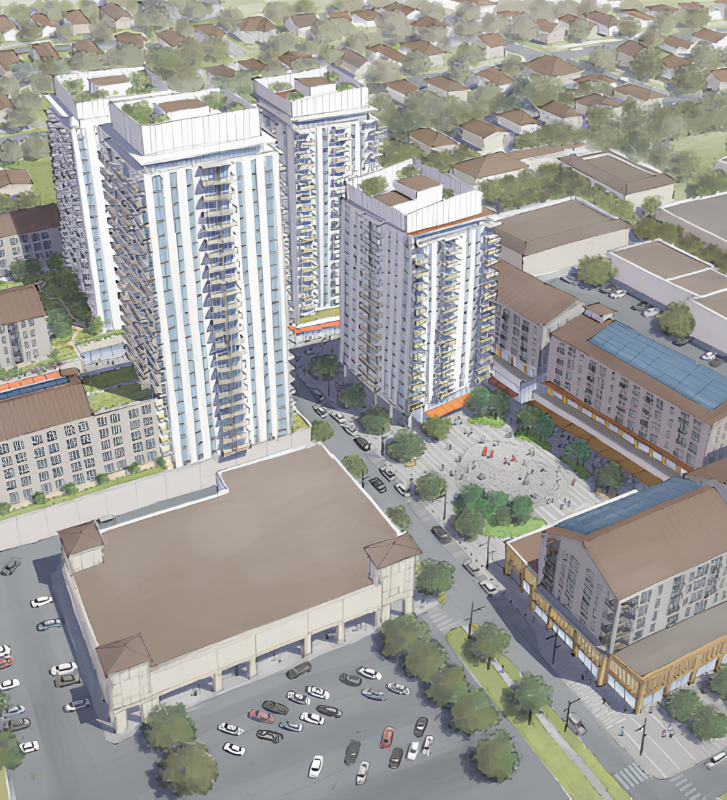
“We’re not seeing anything really trade on land value today. We’re seeing trades be underwritten and close on an income basis,” said Gormley. “If it has latent development potential, the cost to build mid- and high-rise today doesn’t really pencil.”
Still, the property’s long-term future could look very different. “Long, long term, not anytime soon, it is a candidate for redevelopment for higher density,” Gormley said.