

With all the uncertainty roiling the Lower Mainland’s real estate market, Gordon Wylie and his partner Jeff Brown at NorthStar Developments weren’t planning to take on another venture while they were still in the middle of building their six-storey Porthaven apartment building next to Port Coquitlam’s city hall.
But then a project nearby stalled after its developer—like many in the region over the last two years—ran into trouble and the site (where crews had gotten as far as building the parkade) was put up for a court-ordered sale.
NorthStar picked up Quarry Rock Development’s “The Met” property for an attractive $11.6 million—less than its assessed value and nowhere near the $23 million owed to 57 creditors.
While that was bad news for the bank that lent Quarry Rock its money and for the unpaid contractors who worked on the project, it meant that NorthStar could plan for housing that had a better chance of bringing a new level of affordability to Port Coquitlam. And it would also contribute to creating a noticeable urban centre for this small municipality.
“We realized there was a hole in downtown Port Coquitlam that had sat there for two years. It was not good for Poco or for downtown,” says Wylie.
Sales at their Porthaven project had gone well in the spring of 2024, with 70 percent of buyers being locals who wanted to stay local. Because of that, Wylie figured there was an appetite for more, but at even lower prices than Porthaven.
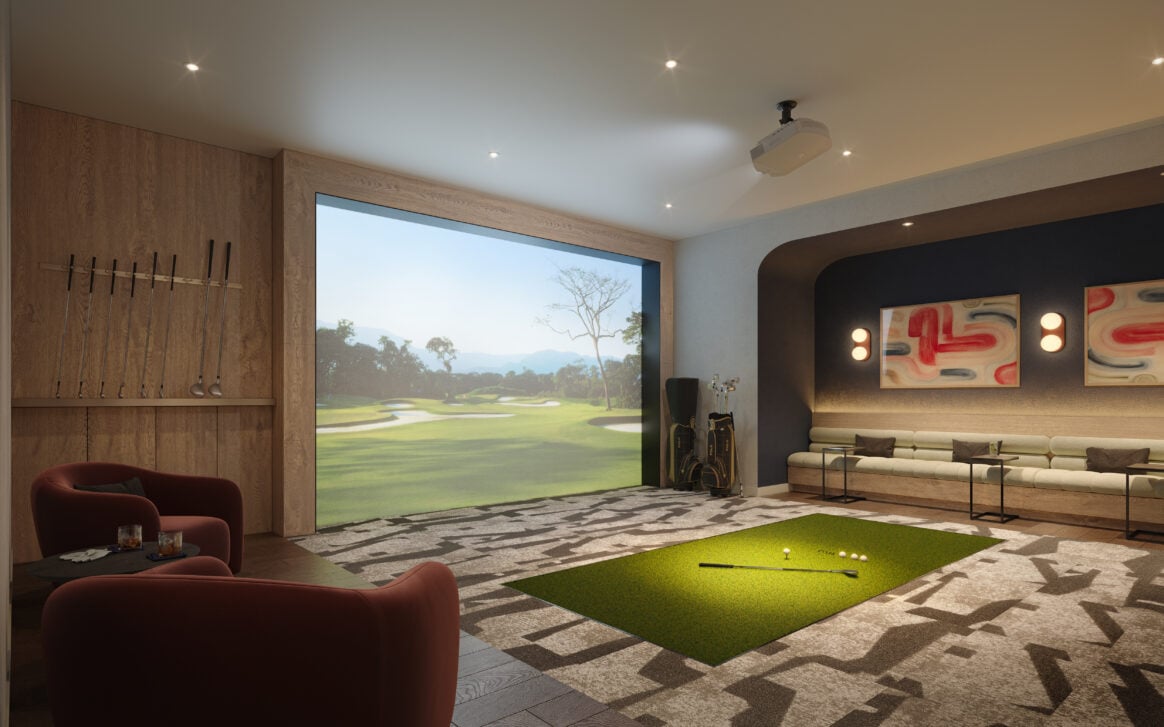
While that project was marketed at around $950 to $1,000 per square foot, the re-designed Met project, now renamed Livy, is being offered for less than that, with small studios going for as low as $299,000. Livy’s new concept echoes that of some of the hip new budget hotels appearing in Europe and North America—a small living space, with lots of communal extras in the building: co-working pods, on-floor storage, a wellness spa with a cold plunge pool and hot tub, a virtual golf lounge, to name a few.
Sounds great, you’re thinking. Yay for the region’s beleaguered buyers, you’re thinking. Why not do that with the many sales of distressed development properties that are popping up throughout the region and finally get some cheaper housing onto the market?
Well, that is happening in some cases. But brokers are noting that even foreclosed-on sites that are being offered sometimes for significantly less than their presumed value have seen sales slow down in the last year. NorthStar bought the Livy property in November 2024 when there was some hope across the development industry that declining interest rates would bring buyers back to the market.
But 2025 was bleak, so bleak that even bargain-basement prices aren’t enough to entice the still-healthy developers off the sidelines. Bids are coming in below the debt levels on projects that have run into trouble in the last year. And there seems to be no end in sight.
“This is a monumental re-set,” says Mark Goodman, whose brokerage specializes in apartment and multi-family development sites. The company has a list of court-ordered sales on projects from Vancouver to Langley that it’s working on. “We’re going to see continuing pain and more distressed sales for at least two years. And the price is going to have to be significantly lower.”
At the Vancouver Colliers division that deals with foreclosures, court-ordered and desperation sales, it’s the same story.
“Until early 2025, we had several land sales in distress that resulted in multiple competing offers when presented to court for approval. In the early part of last year, there was greater optimism that the market would recover. This has stalled with uncertainty remaining on where pricing is going to land,” says Jennifer Darling, associate vice-president.
The two dozen or so well-capitalized Vancouver-area development companies that didn’t overextend themselves, didn’t have to rely on personal guarantees to get financing and didn’t get multiple lines of financing on the same property are definitely looking around at good deals, as always happens among the well-off during downturns. When the 2008 global financial recession hit the U.S. and Canada, for example, Vancouver developer Rob Macdonald made a point of hunting out attractive but half-built and in-trouble sites, especially in the U.S.
There weren’t a lot of foreclosures in Vancouver in 2008 and 2009 because the housing downturn lasted such a short time here. That’s not the case this time, where many developers are saying the current collapse of construction and sales is the worst they’ve seen in their lifetimes.
In spite of that, a few of the larger developers are still “out looking at opportunities, looking for the best deal,” says Darling. Those developers want to keep their construction teams intact and they’re doing what developers often do in a downturn—use the time to prepare for the inevitable upturn.
Among them is Landa Global Properties, which has been operating in Vancouver for about 15 years, building mostly smaller, luxury lower-rise apartment buildings, although it currently has a tower under construction at Alberni and Denman in Vancouver and another in Surrey.
Like NorthStar’s Wylie, Landa CEO Kevin Cheung (speaking to BCBusiness from a chairlift at Whistler) says that his company is acquiring distress properties strategically, sites that are either close to where they’ve been building already or have some other feature that makes them look viable.
“We have to deal with all the skeletons in any project,” says Cheung. Even if a project is partway built, “it takes the same amount of work” to get it to completion as something fresh off the drawing board.
Landa has acquired three distressed properties in the last year: Siena, with 38 apartments in a luxury low-rise building in Burnaby Heights; Park & Granville in South Vancouver, which consists of 17 upscale townhouses; and Theodore, a long-empty lot in Vancouver’s Kerrisdale neighbourhood, which will become a four-storey mixed use development.
Cheung, who grew up in Vancouver but whose father was a major developer in China, says his company is in a better position than some because it didn’t get overextended.
“The ones who are over-leveraged are the ones who got in trouble. We do not have mezz [mezzanine] debt or second mortgages.”
He’s not kidding himself that the current pain in the real-estate market—which has made buyers even more wary as they see pre-sale condo projects failing—is over.
“Right now, people have such a bad feeling about pre-sales,” he said.
In spite of that, there is still demand in certain neighbourhoods at certain prices, he believes.
As to when things will get better, Cheung and everyone else is still trying to guess at where the bottom is and not coming up with any solid predictions.