
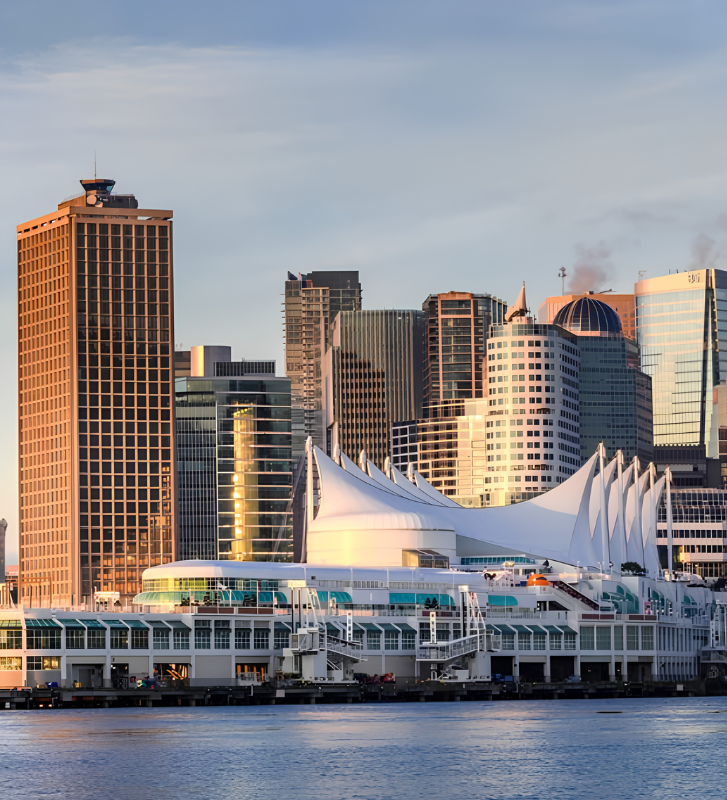
Days after stepping into the role of president and CEO at BC Pavilion Corporation (PavCo), Rehana Din faced the biggest test in the organization’s history: FIFA World Cup. As she inherits a huge event portfolio that includes the Vancouver Convention Centre and BC Place—at a time when the stadium’s anchor tenant is openly weighing its future there—Din’s role will be crucial as the crown corp seeks to expand its economic viability. We sat down in her waterfront office at Canada Place to talk about the road ahead.
You joined PavCo as CFO 13 years ago before moving into COO, and ultimately you were the unanimous choice in a board vote to succeed president/CEO Ken Cretney. How does that feel, and what are your priorities in the first six months on the job?
It feels great. It was a very purposeful changeover to let me lead the organization through the World Cup. I’ve worked on it since the day we heard about it. So, of course, my first priority was to get the World Cup done and make sure that it was successful. We had a ton of capital improvements to make, which were all on time and on budget. I’m super proud of that. That’s done, so the now first thing is getting out there and listening, meeting our teams, meeting our stakeholders.
The transformation of BC Place for FIFA matches—inside and outside the facility—was a world class experience for many Vancouverites, and seemed to prove that we as a city can have these amazing moments. How do you keep up that momentum?
I think that what you just said—we can do it—is probably, to me, the first piece in that momentum. The World Cup gave Vancouver that opportunity to show the world and our own community we can do this, and it set a bar for the things we can do. I have a new phrase, which is “events create economy.”
PavCo is in a unique position as a Crown corporation that has to run like a commercial operator. And BC Place is often called the only stadium in Major League Soccer owned and operated by a government. Is that a strength or liability?
BC Place is a venue that was constructed to benefit all British Columbians. And it’s run by people who are in this province, not some third party that is out in the U.S. or based anywhere else. Our constituents in that building are soccer, football, rugby, cricket and our music and community events, and we have a duty to everybody. So, in that way, I think for the people of B.C. it’s a strength that there’s a venue out there that doesn’t have a vested ownership in just one entity.
View this post on Instagram
Let’s talk revenue split. The Whitecaps have called PavCo’s model, which takes parking and the majority of concessions and sponsorship revenue, financially unworkable. Is that model something you’re rethinking?
All I can say is, we’re having a lot of conversations with our two main tenants. And we want to find a way to help them achieve their maximum impact to their business by not hurting ours. We are revamping a little bit of what we’re doing and giving some more incentive to allow people to maximize their ability to generate revenue from the building.
So—what’s actually happening with the Whitecaps?
We’ve been working collaboratively with them for months. We have a great relationship between our two executive teams. By the time this comes out, we’ll probably have some clarity.
You say the Vancouver Convention Centre may have had some of its best booking years in history. How do you think about filling in the calendar around the big, years-out bookings when you’re trying to plan ahead?
When we book business, we really try to give priority to those that are bringing new money into the province. You’re incentivizing them a little bit more, but then you’re making up for that. So, you book those out two, three, four years out, and then you look at the year that you’re in and say, “Okay, how can I fill in these little holes with things like corporate events or a banquet or a wedding or something else?” Those are the things that really bump up that profitability.
So, wrapping up… A lot to look forward to for the facilities?
I think a lot about what’s next. And then, start looking at: “What does Vancouver look like over the next 10 years when it comes to events?” It’s an exciting time.