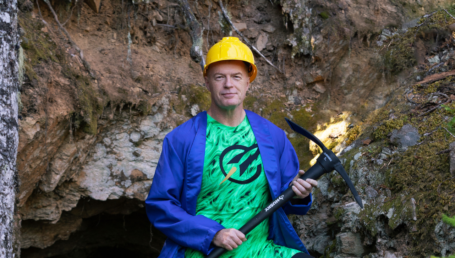

Dean Shillington wears many hats. As the founder of Knightsbridge Capital Group, the former GE Capital executive has spent nearly two decades investing in distressed, high-growth and under-the-radar businesses. He’s also the owner of Caffè Artigiano, which is expanding rapidly and is now the second biggest coffee roaster in Canada after the acquisition of Salt Spring Coffee.
Lately, though, soccer has emerged as one of his biggest passions. Shillington played an active role in the formation of the Canadian Premier League (which played a critical role in strengthening Canada’s World Cup credentials) and is now co-owner of Pacific FC and Vancouver FC. BCBusiness sat down with Shillington to talk about football club ownership, scaling Artigiano and why he believes soccer remains one of our most underestimated business opportunities.
View this post on Instagram
You’ve built your career around distressed and undervalued businesses. What’s the throughline across everything you do?
My world really revolves around the underdog and trying to see the jewels that are buried within problems. I like to find brands that have a good name and reputation but got into problems for one reason or another and I can see a path to fixing it. The two things that have probably been the cornerstone of everything are problem solving and the ability to make decisions. My job at GE gave me all of that.
How do you decide when to say no to a deal?
I have to believe in management first. If I don’t believe in the people who actually do the work on the ground, I will never be involved. I also strictly believe in not corporate virtue signalling—faking it and trying to present as something you’re not. If management and ownership doesn’t think along those lines, I’m out.
How did you end up in soccer?
My buddy used to play for the Canadian men’s soccer team, and I used to coach his son in Little League baseball. When he came back from a vacation, he decided it was a good idea to start a women’s professional team. The men’s league was starting at the same time. So I got pulled into the soccer world.
There was an obvious disconnect between what was happening in Canada and the rest of the world. Canada was the only country where a foreign league—the MLS—was allowed to cross an international border. So Canadians were considered imports in their own country. It became a real underdog story. That somehow wrapped into my DNA. There was this problem with the Canadian ecosystem, and the idea of being part of fixing it is what inspired me to get involved.
View this post on Instagram
Do you think Canada underestimates the business potential of soccer?
Absolutely. I think it’s a Canadian thing. I would put the fan base of the Saskatchewan Roughriders—historically, as a Canadian—at a 5 out of 10 compared to how passionate Argentina is to the sport [of soccer], or England, or pretty much the rest of the world. I’m hoping the World Cup gives us a dose of how the world views the sport. It’s already the most participated sport for kids. Parents watch their kids play but don’t really have a connection to it historically. But I’m hoping that the fan experience shows Canadians what being a fan is really like.
Let’s talk about Caffè Artigiano. You’ve been modernizing and expanding aggressively since purchasing it in 2019, and there are 24 locations already. What’s the growth plan?
We’re going south right now. We’re opening in Palm Desert this fall. I’m starting a U.S. migration. And we’re going almost 100-percent organic—our coffee, our milk, our baked goods, our food. We’re going to be the only coffee chain on the planet that’s actually all organic. We’re doing things that are just a little bit more authentic.
Starbucks used to be a good company that went sideways. They got wrapped up in politics and virtue signalling instead of remembering why people went to them. Now they’re more of a fast food place—sugary drinks and all these bad products. We’re the antithesis of that.
What do you want your legacy to be?
My goal has always been to get involved with projects and businesses and lead them to where they’re better than when I came in: to create a sustainable future, stabilize and create jobs. I like being known as a trusted partner and someone that’s not coming into things the way a typical private equity firm would. We’re a little bit more grounded than that.