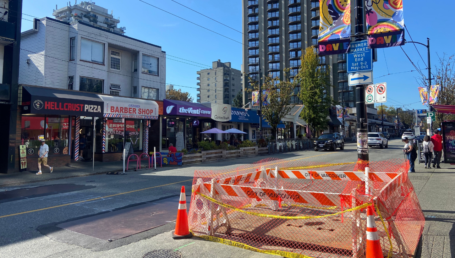

You didn’t need a ticket to BC Place to feel like you were part of the 2026 FIFA World Cup. For 39 days, Granville Street became a festival of its own, with shoulder-to-shoulder crowds, overflowing patios and fans from around the world gathering between matches. The pedestrian-only corridor quickly emerged as Vancouver’s unofficial fan zone—and for many businesses, one of the busiest stretches they’ve ever experienced.
In the days after the final whistle, BCBusiness checked in with bars and restaurants on the strip to see whether the tournament delivered the economic windfall many had been banking on. The answer was a resounding yes.
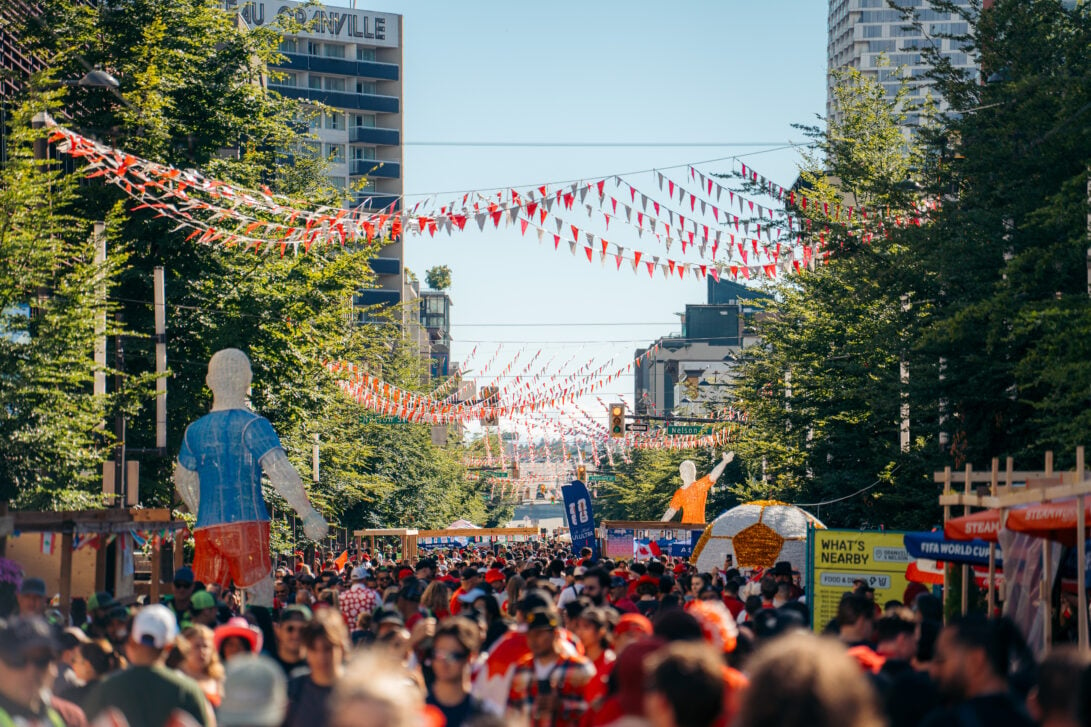
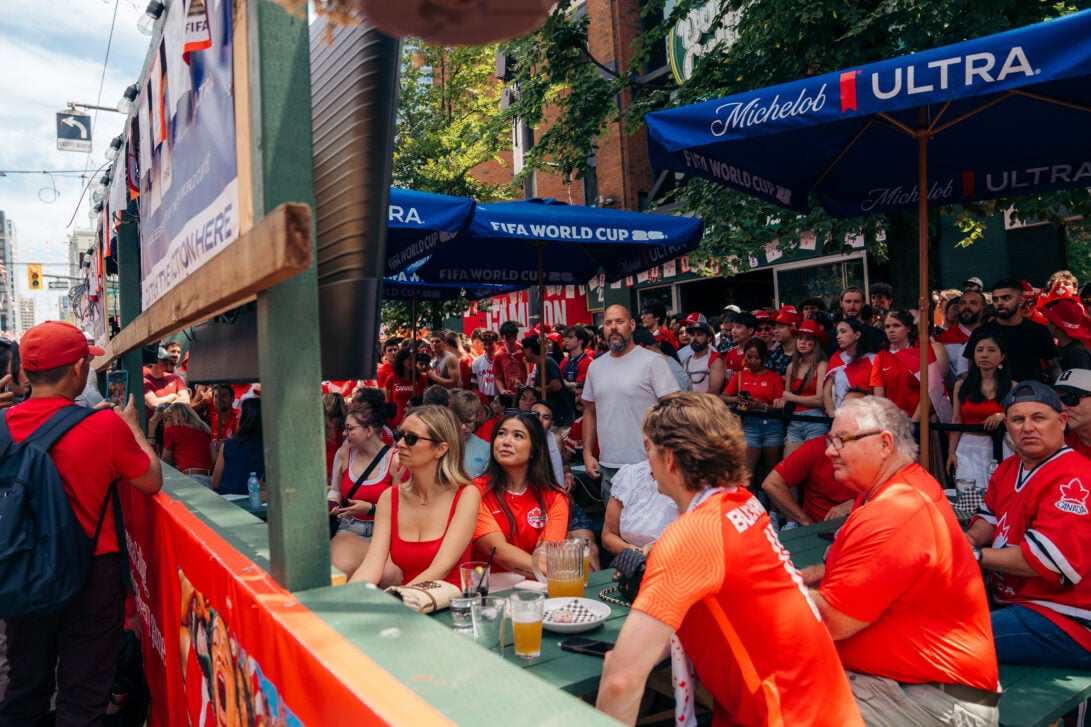
Bars extended their hours. Restaurants brought in extra staff. Retailers welcomed a surge of foot traffic. And operators across the entertainment district are now reporting record sales—crowds that stretched late into the night and customer traffic that far exceeded a typical summer.
“The response from our businesses has been overwhelmingly positive,” says Jane Talbot, president and CEO of Downtown Van. “While we knew Granville Street would attract visitors, none of us anticipated the incredible volume of people we saw. It exceeded our expectations and demonstrated what’s possible when we create a vibrant, welcoming, people-first destination.”
Hospitality businesses emerged as some of the tournament’s biggest winners.
According to Talbot, many bars, restaurants and nightlife venues on Granville Street reported record-breaking sales throughout the tournament. Cabana Nightclub saw crowds that “even exceeded Halloween,” traditionally one of its busiest nights of the year, while June sales were up 250 percent compared with last year. Multi-level sports bar Dublin Calling sold out of beer on one occasion because demand was so high.
View this post on Instagram
For Good Co. Granville, the numbers were even more dramatic. “We experienced a 400 percent increase in overall business,” says Nate Sabine, director of business development at Blueprint, which operates the venue. “Guest count and spend were all about four times the normal.” To keep up, Good Co. expanded from operating five days a week to seven, began opening around 10 a.m. instead of 3:30 p.m. and temporarily reassigned staff from its five sister venues. “It exceeded our biggest projection by miles,” Sabine says. “No one knew what to expect or how much people would adopt the zone as their chosen place… turns out they loved it.”
The crowds weren’t limited to match kickoffs. Fans often arrived hours before games and stayed long after, creating a steady stream of customers from morning until late at night.
“We experienced a significant increase in guest traffic and sales throughout the tournament, with several match days performing four to five times above a typical summer day,” says Shawn Landry of Dublin Calling. “What stood out most was the consistency of demand across the tournament rather than a single peak weekend.” On days with multiple matches, some guests treated the venue as a home base for the entire day, watching several games while eating and drinking, while others rotated in and out between kickoffs. “That created a steady flow of guests from opening through late evening,” Landry says. “FIFA was more than just a sporting event; it became an all-day social experience.”
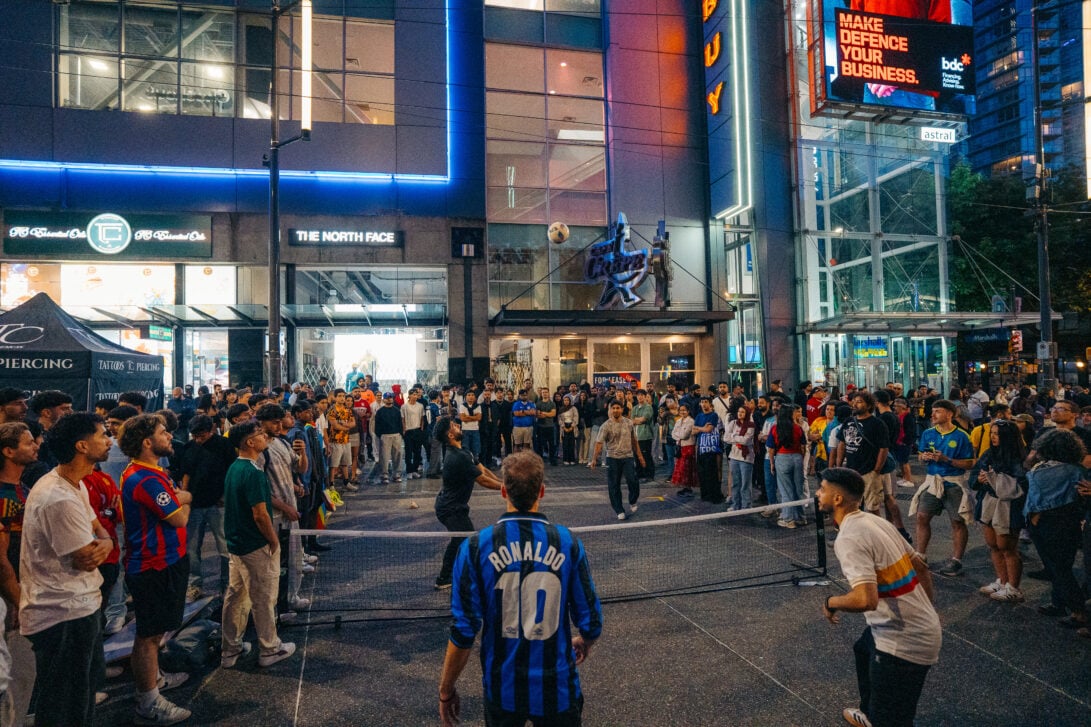
At The Roxy, one of the strip’s iconic nightclubs, director of operations Bill Degrazio says business increased by about 40 percent during the tournament. “Granville Street was bustling at all periods of the days and throughout the week,” he says. Rather than seeing customers spend dramatically more per visit, the venue simply stayed busy much longer than usual. “Where we might be busy for four hours, we were now busy for seven hours on a game day.” The Roxy also extended late-night service, remaining open until 4 a.m.—hours it normally reserves for Fridays, Saturdays and long weekends—and increased inventory to meet demand.
The busiest days generally coincided with matches at BC Place, particularly Canada’s games. “The Canadian matches naturally generated incredible excitement,” says Landry. “High-profile knockout matches and evening kickoffs also drove exceptional attendance.” Good Co. also identified Canada, France, Brazil, Argentina, England and Spain among the teams that drew the largest crowds.
Operators say the tournament also brought a noticeably different customer mix. “We had everyone from every corner of the globe,” says Sabine. “Tourists, people on working visas, international students, immigrants and many, many locals.” Landry says international visitors mixed with regular Vancouver customers to create an atmosphere unlike anything the venue typically experiences. “It reinforced Vancouver’s reputation as a welcoming international destination and showcased the city’s ability to host world-class events.”
Retail businesses also enjoyed a major increase in pedestrian traffic, although Talbot notes that higher foot traffic “didn’t always translate into immediate sales.” She sees that as an opportunity to expand daytime programming and continue drawing people downtown beyond major events.
Beyond the immediate economic boost, many operators say FIFA changed perceptions of Granville Street itself. “I think the impact is that it reminded locals that Vancouver has an entertainment district that can be more than what it is today,” says Sabine. “It needs care and attention and deserves to be revitalized and reimagined.”
Degrazio agrees. “FIFA was able to showcase Granville Street as a premium area for nightlife, bars and restaurants,” he says. “I think it helped change people’s perspective and reimagine what the district could continue to look like in the future.”
With FIFA now in the rear-view mirror, attention has shifted to a bigger question: can Granville Street keep the energy alive?
Earlier this month, the city council voted to keep the pedestrian zone in place for another seven weeks—until Labour Day weekend—approving up to $4.75 million for operations and programming. Downtown Van will use $1.25 million of that funding to bring daily entertainment and free public events to the corridor, hoping the crowds that arrived for soccer will return for something else.