
When Scott Paper’s groundwood pulp mill in New Westminster closed in the early 2000s, ending its demand for Fraser Valley cottonwood, it forced third-generation Métis farmer Melanie MacInnes to rethink the future of her family’s land. The 100-acre farm had already morphed from dairy supplier to cottonwood plantation for toilet paper and equestrian operations—but it was a passing film crew, circling overhead in search of the perfect set for Scary Movie 4, that would change its future. MacInnes had no idea she was about to enter Langley’s film economy.
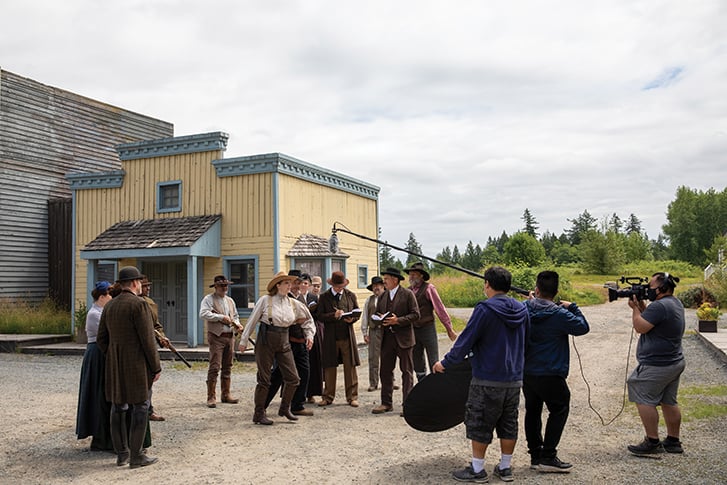
Today, that chance flyover has become a full-fledged film operation called Jamestown, turning MacInnes Farms into a cornerstone of B.C.’s screen-industry footprint. The farm’s backlot has since hosted many popular productions, ranging from When Calls the Heart and Avatar: The Last Airbender to Riverdale, Fire Country and Wild Cards.
Yet, film is only part of the story. Like many of the Fraser Valley’s most entrepreneurial farms, MacInnes Farms has become a tightly woven ecosystem—part brewery and cidery, part orchard and grain field, part community hub and, soon, part glamping retreat with its own sauna. It’s a fitting microcosm of the Township of Langley, where more than 70 percent of the land is protected for agriculture, but the economy has found a way to become far more layered than the rows of crops that sowed its original seeds.
“These industries don’t compete for the same resources—they complement one another,” explains Shauna Wilton, executive director of Tourism Langley, which recently spearheaded an initiative to connect audiences with real Langley locations they’ve seen on screen. “Film crews support local hospitality businesses. Warehouse workers live in communities supported by retail and services. Agricultural tourism brings visitors who spend money across multiple sectors.”
Tim LaHay of the Barley Merchant describes the local business ethos as “co-op”etition. LaHay, who grew up in Langley and whose taproom curates a wide offering of local craft beer, helps lead the Langley Loop—a loose collective of breweries, cideries and distilleries across the township that meets regularly to share challenges, trade solutions and cross-promote one another. In an industry built on collaboration rather than territorialism, he says. The experience isn’t about choosing one stop—it’s about visiting all of them. Each brewery, LaHay notes, reflects a different pocket of Langley: Brookswood Brewing, rooted in its South Langley neighbourhood; Dead Frog, one of B.C.’s original craft pioneers; Trading Post in Fort Langley, with its legacy brewers and cult-favourite chicken burgers; Smugglers Trail and Camp Brewing, racking up awards; Roots and Wings Distillery, where dogs, trees and tasting rooms come together; and the Fraser Valley Cidery and Farm Country Brewing, where orchards and fields are as much part of the experience as the pint glass. “You could almost map Langley through these breweries,” LaHay says.
The handshake economy is a big part of what lends the township its resiliency, besides policy and planning. Case in point: during last year’s B.C. liquor strike, LaHay’s shelves stayed stocked thanks to direct relationships with local brewers and distillers. He then helped other bars find B.C. substitutes that could supply their bars.
At Sabà Bistro in Fort Langley, owner Simone Hurwitz puts the collaborate-not-compete philosophy into practice by sourcing as much as she can from local producers, even as costs rise. Hurwitz moved to Langley for her daughter’s fine-arts school but stayed because of what she found here: a place where rich farmland sits right next to a real, functioning village-like community. Dairy farms, cheesemakers and produce fields are minutes away, and the same people pass through her doors every day. For an immigrant chef shaped by European food cultures, it was one of the few places in the Lower Mainland where sourcing locally and building a true neighbourhood restaurant could happen at the same time.
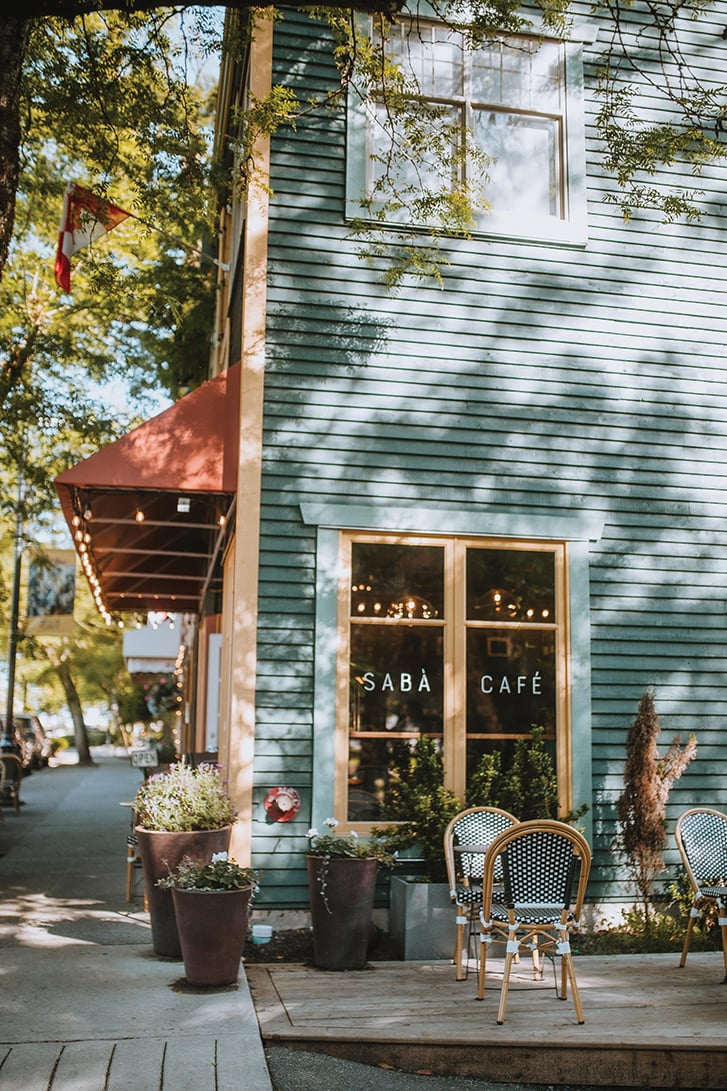
The intimacy Hurwitz describes is backed up by the data. In BCBusiness’s resilience research, the Township of Langley scores 8.49 out of 10 for resident sense of belonging—and on a recent morning at Sabà’s spin-off European café, it was visible in small ways. Hurwitz greeted guests by name, checked in on regulars and quietly comped a customer’s breakfast when she learned they were having a bad day.
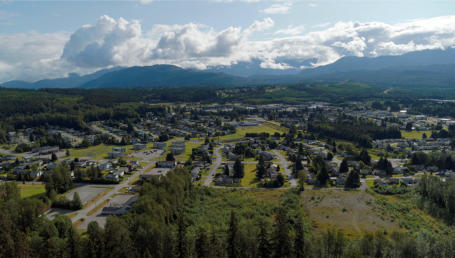
Step outside Fort Langley’s quaint, café-lined streets and a more complicated picture comes into view. As LaHay puts it, the township is juggling two polar-opposite identities. Head south from Walnut Grove along 16th Avenue and Glover Road and you pass the picturesque sports fields, working farms, a golf course and cider orchards—a landscape that still feels unmistakably rural and pristine. Just a few blocks west, the scene flips. Drive down 200th Street from Highway 1 toward Langley City and you’re pulled into a very different rhythm: big-box retail, the Langley Events Centre, freight trains slicing through traffic and long stretches of stop-and-go congestion. The contrast captures both Langley’s appeal and its growing pains—a fast-growing community trying to hold together two ways of life while infrastructure strains to keep up.
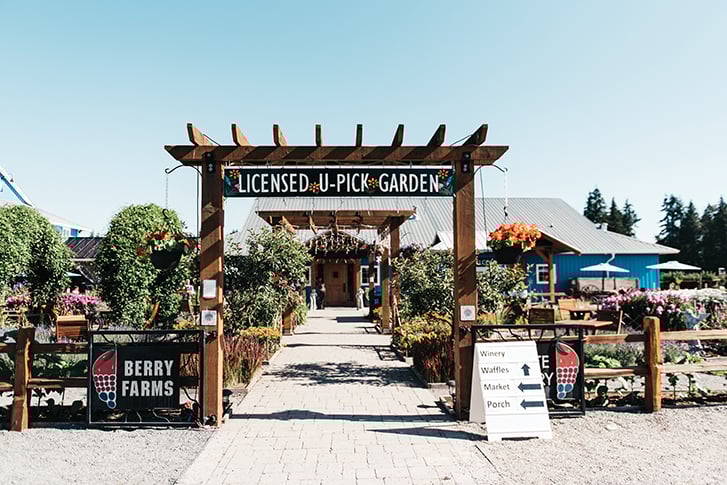
At the 200-acre Krause Berry Farms, that tension shows up in unexpected places—most clearly in who can, and can’t, get to work. The 50-plus-year-old farm has become one of the township’s busiest agritourism destinations, known for its U-pick fields, bakery, winery and towering berry pies. Yet owner-operator-duo Alf and Sandee Krause say they regularly lose qualified job applicants because transit simply doesn’t reach them. With no SkyTrain access and fewer bus options than they had 15 years ago, even a thriving operation can struggle to staff up. Highway 1 construction and piecemeal road widening only add to the challenge of moving people around a rapidly growing municipality.
That connective gap is one the township hopes the much-anticipated Surrey–Langley SkyTrain extension will begin to close. The under-construction project will extend the Expo Line 16 kilometres, running primarily along Fraser Highway from King George Station in Surrey to 203 Street in the City of Langley. Slated to push rapid transit deeper into the Fraser Valley, the expansion is expected to reshape commuting patterns, unlock labour pools and intensify development around key nodes like Willowbrook. Even so, mayor Eric Woodward frames the development as both an opportunity and test, noting ongoing concerns about whether neighbouring municipalities are adequately prepared to invest in public safety such as police and fire services.
Woodward is also candid about the other pressures that come with rapid growth, specifically around housing challenges. Homelessness, he notes, has become an increasingly urgent issue for his government—one they are often expected to manage without the funding tools to properly address it. “While the township can approve housing units, it is the responsibility of the provincial and federal governments to fund the construction of purpose-built housing that serves these populations,” he says. “In the meantime, property-tax-funded emergency services—such as fire, police and bylaw enforcement—are left to manage the issue on a day-to-day basis.”
The teething challenges are hardly surprising given Langley’s pace of growth. The township’s population rose 27 percent between 2011 and 2021, and by 2024 had reached roughly 160,000 residents, increasing pressure on housing. Vacancy rates and supply remain challenges across B.C., but Woodward says the township has focused on delivering a mix of housing types and has created the Langley Housing Trust to support community-owned, purpose-built rental housing for local workers.
And for all the pressures of growth, Woodward says the township is largely on track. Langley is approaching its long-standing goal of a one-to-one ratio between jobs and its labour force—an aspiration embedded in its official community plan since the early 1990s—while recent reforms have cut red tape, lowered business licence costs and shortened permitting timelines to help new employers get up and running faster. At the same time, the township has accelerated long-needed infrastructure investments—from new athletic facilities and upgraded parks to road expansions and a new fire hall.
Taken together, Woodward argues, those efforts are about ensuring Langley’s growth is matched by opportunity, amenities and quality of life—not just for today’s residents, but for the next generation as well.