
Among the casualties of renewed conflict in the Persian Gulf this year was Qatar’s Ras Laffan Industrial City, the world’s largest liquified natural gas (LNG) production plant. Whether or not the country is able to export LNG by tanker through the contested Strait of Hormuz in the months to come, Qatari officials say lasting battle damage will diminish production for years.
That has left natural gas importers in Asia feeling nervous. India’s restaurateurs began rationing cooking gas, removing slow-simmering gravies and dosas from menus. In South Korea, where imported LNG fuels a quarter of the country’s electricity generation, the government encouraged its citizens to take shorter showers as an act of patriotism. It also restructured electricity pricing for the nation’s keystone industrial sectors.
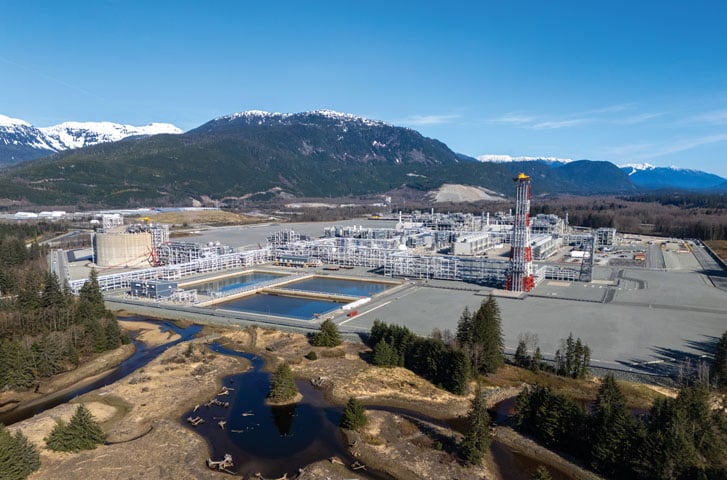
As they look toward the long term, leaders in Seoul, Tokyo, Taipei and Beijing have activated or accelerated plans to lessen their dependence on geopolitically risky Gulf suppliers for fuel. One ready alternative is LNG from British Columbia. Production at LNG Canada, the country’s first LNG export facility, reached 1 million metric tonnes per month for the first time in April 2026. The terminal, located in Kitimat on B.C.’s North Coast, exported its first cargo to South Korea in the summer of 2025.
An island of calm in a turbulent sea
A world in flux has cast a spotlight on B.C.’s economic advantages. Canada is a stable democracy. Its West Coast ports offer shipping routes that are free from chokepoints and are closer to Asia compared to LNG terminals in the Gulf of Mexico or Qatar. But the 2026 “Third Gulf War” isn’t the only global event turning investors and customers toward B.C. And they’re not just coming to buy natural gas. They’re also coming for B.C.’s mines and minerals.
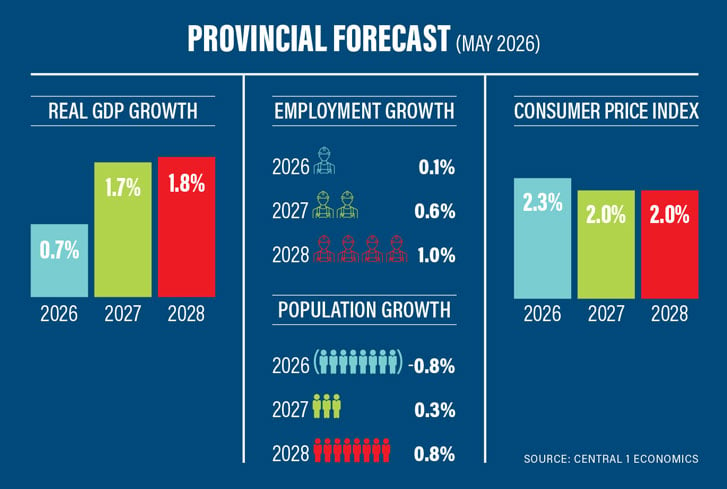
B.C.’s economy showed unexpected strength in 2025, according to a Statistics Canada report released in May 2026. Real GDP growth reached 2 percent, exceeding the national average of 1.6 percent and beating the 1.4-percent growth forecast by Deloitte Canada. According to Statistics Canada, oil and gas extraction, as well as mining and quarrying, were the biggest contributors to B.C.’s GDP growth, with 7.3 percent and 9.4 percent growth, respectively.
The multitrillion-dollar race to build artificial intelligence infrastructure is stoking demand for copper wiring, sending global prices for the metal to all-time highs. Here in B.C., mining exploration spending soared to a record $751 million in 2025, according to EY’s British Columbia Mineral and Coal Exploration Survey. Copper exploration spending surpassed gold for the first time ever.
Some of B.C.’s minerals are used in strategically important industries like aerospace, defence and electric vehicle manufacturing, which are all vulnerable to Chinese domination. In February 2026, Canada’s federal government announced a Defence Industrial Strategy that takes action to increase the production, stockpiling and procurement of these minerals.
The federal and provincial governments are supporting both the energy and minerals sectors by fast-tracking project approvals and providing financial and tax incentives. They are also co-funding electrical transmission system upgrades and connections to remote sites.
In May, for example, Natural Resources Canada announced more than $100 million in funding for five B.C.-based mining projects. That includes up to $50 million to upgrade BC Hydro’s regional power transmission system to support Teck Resources’ Highland Valley Copper Mine Life Extension Project near Kamloops.
Long-term vision
Major projects like these take years to come online and start producing for customers abroad. LNG Canada’s investors, which include Asian participants Korea Gas Corporation, Mitsubishi Corporation, Petronas and PetroChina Company Limited, bought their stakes in the joint venture in 2018.
In January 2026, B.C. Premier David Eby laid some groundwork for future investment on a trade mission to India. At stops in New Delhi, Mumbai and Chandigarh, he and his team highlighted B.C. as a reliable partner with opportunities in LNG, hydrogen, critical minerals, sustainable wood products and other technologies.
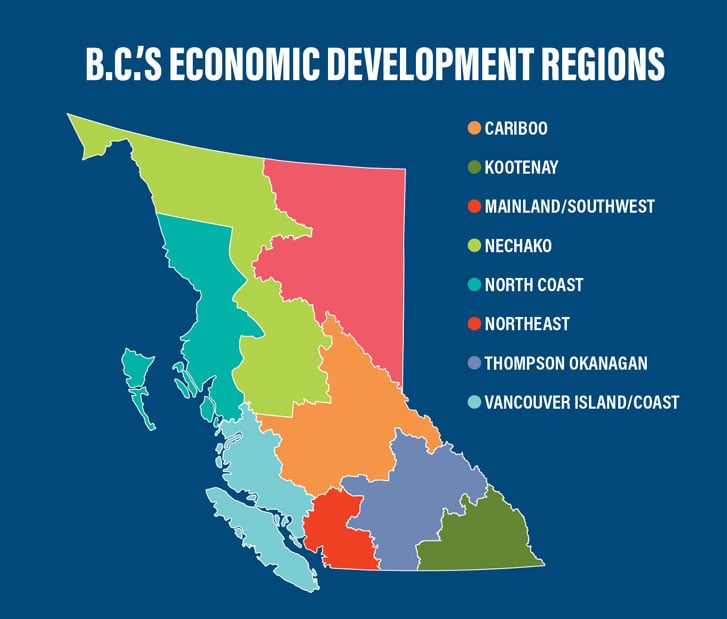
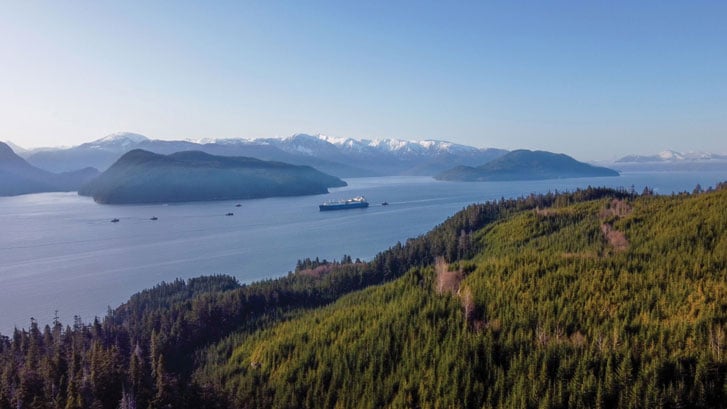
LNG Canada’s maximum capacity of 14 million metric tonnes per annum can’t replace the roughly 81 MTPA Qatar exported before the recent war with Iran. But two more B.C. terminals—Woodfibre LNG in Squamish and Cedar LNG in Kitimat—are under construction and scheduled to begin shipping by 2028. LNG Canada is also nearing a final investment decision on a proposed a second phase that would double its original capacity to 28 MTPA, while Ksi Lisims LNG has a proposed project near the Alaska border that this year attracted a 20-year sales commitment from customers in Germany.
By the early 2030s, if all these projects go ahead as planned, B.C. will have 45 million tonnes per year of liquefaction capacity, ranking Canada among the top five LNG export countries in the world. While short-term storm clouds may loom for the provincial economy, the long-term future, even in a volatile world, continues to look bright.