
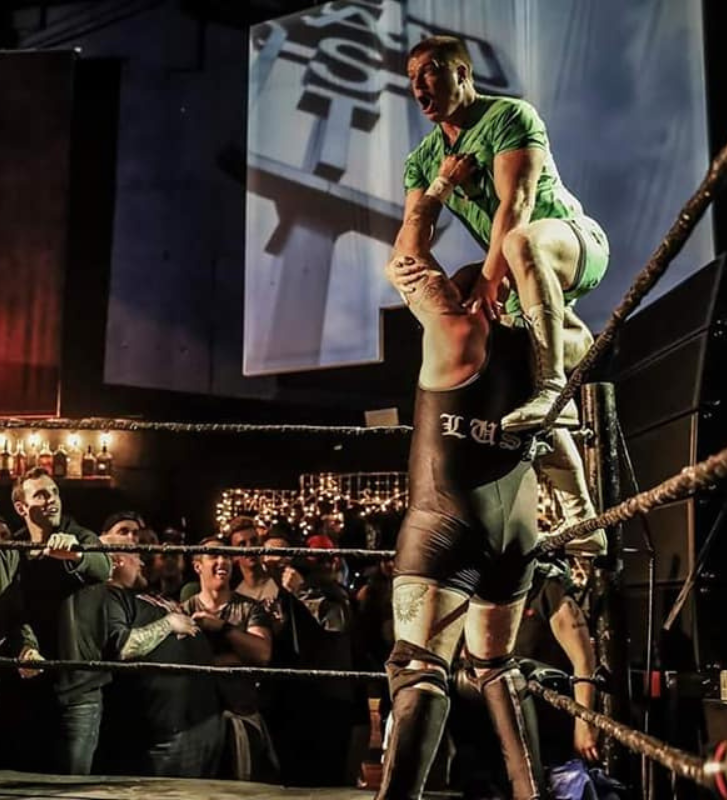
Long before he was a criminologist, lawyer, mining executive and serial entrepreneur, now-Victoria-based Pete Smith was getting booed by wrestling fans as “Randy Tyler”—a ring name handed to him by his promoter minutes before his first professional wrestling match at 17.
Standing six-foot-four and weighing in at more than 200 pounds, the red-haired wrestler spent his late teens and early 20s criss-crossing B.C. and the Pacific Northwest, performing in community centres from Smithers to Portland. Fans taunted him with chants of “Archie! Archie!” for his resemblance to the comic-book character, while Smith—playing the villain—did everything he could to make the crowd hate him.
Then, in a small Portland venue, Smith found himself sharing a ring with one of his childhood heroes: Jimmy “Superfly” Snuka. By then, the wrestling legend was nearing the end of his career. The crowds still recognized him, but Smith noticed something else backstage. Snuka’s body was breaking down. The money had largely dried up. And, beneath the bravado, there was a lingering uncertainty about what came next. “I thought if I could just get to that level, I’d be set,” Smith recalls. “Then I started meeting these guys and realized they were worried about where their next paycheque was coming from.”
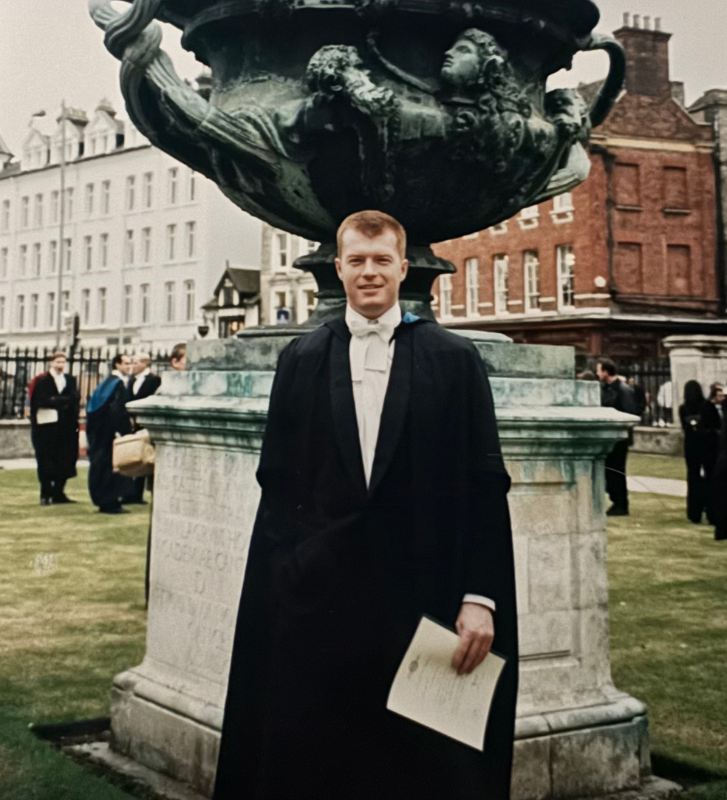
At 19, Smith’s second act began in an unlikely place: a grade 12 social studies night class he needed to qualify for admission to Langara College in Vancouver. This time, though, he approached academics differently. Rather than thinking of himself as a student, he treated each class like a puzzle: Who was the professor? What kinds of questions appeared on exams? What did success actually look like? The strategy worked. A student who once struggled through high school began earning straight As, first at Langara, then in criminology at Simon Fraser University. A scholarship even took him to the University of Cambridge for a master’s degree in criminology, followed by law school at UBC, a clerkship at the Supreme Court of Canada under Justice Louise Arbour and, eventually, a coveted position at the New York law firm Debevoise and Plimpton.
Yet, even as his resumé grew more impressive, Smith found himself asking the same question that had pulled him out of wrestling years earlier: Was this really the endgame? The answer arrived in the form of a client—a Southern entrepreneur selling his catfish company to a larger seafood business. Smith remembers the man strolling into the firm’s Manhattan office in a green Adidas tracksuit while everyone around him wore suits. Relaxed, confident and clearly passionate about the company he’d built, he seemed to inhabit a completely different world from the lawyers negotiating the deal—one that looked a lot more multidimensional. “I realized I desperately wanted to be him, not me,” Smith admits.
The retired lawyer returned to Vancouver in 2003 and began chasing entrepreneurial opportunities, eventually gravitating toward junior mining. Unlike law, where success often meant climbing a well-defined ladder, mining exposed him to a constant stream of new variables: commodity cycles, investor sentiment, financing hurdles and shifting global markets.
In 2010, Smith co-founded DGM Minerals, a junior mining company named after his three children: Declan, Georgia and Madison. The company held a promising mineral property in Quebec, but it launched into one of the worst downturns the junior mining sector had seen in years. Investors weren’t interested, financing was scarce and the traditional mining playbook wasn’t working.
Instead of waiting for the market to recover, Smith started looking elsewhere. A former Cambridge boxing teammate living in Warsaw had been urging him to visit Poland, where a booming economy was creating opportunities largely overlooked by North American investors. Together, they noticed something missing from the rapidly modernizing country: self-storage facilities.
The pair transformed the struggling mining company into a storage business, acquiring a small operator and raising roughly $20 million in debt and equity to expand. What began as a desperate attempt to create value for shareholders eventually became Less Mess Storage, one of Poland’s largest self-storage operators. Today, the company operates facilities across the country and is valued at roughly half a billion dollars.
For Smith, the experience reinforced a lesson he’d been learning since his wrestling days. The industry almost didn’t matter. What mattered was the challenge.
These days, he spends much of his time focused on his Vancouver-based mineral exploration firm Sasquatch Resources, a company he founded in 2021 to reclaim legacy mine sites by reprocessing historic waste rock and remediating environmental damage.
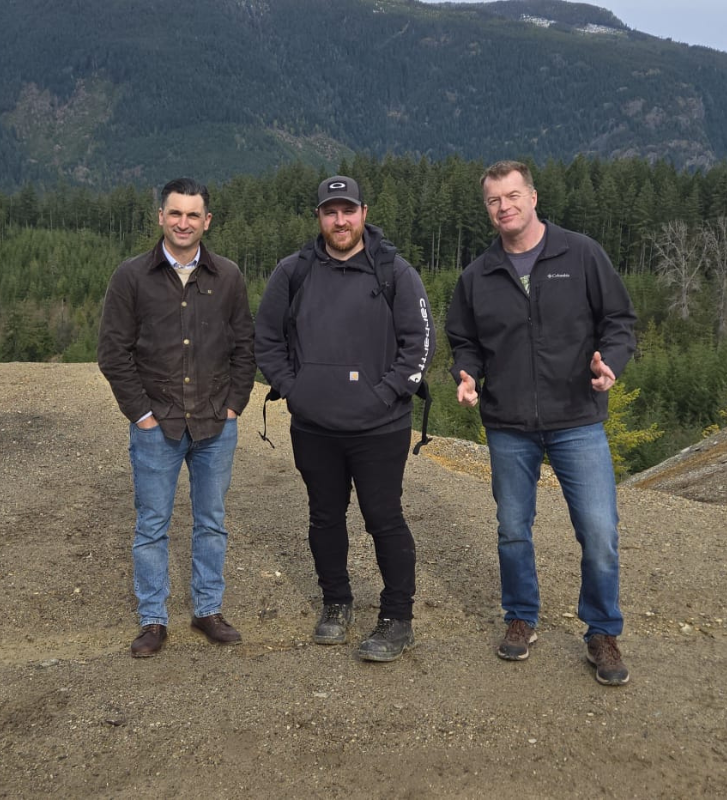
The pattern, he admits, has become familiar. He helps launch a company, navigates its most difficult early years, solves the problems that threaten its survival and then hands the reins to specialists better suited to scale it.
At 56, Smith isn’t sure how many more five- or 10-year projects he has ahead of him. But looking back, he sees a common thread running through every chapter of his career—from Randy Tyler the wrestler to the criminology student who studied professors as carefully as textbooks to the entrepreneur who turned a mining company into a storage empire.
At his core, Smith says, he’s never really been a wrestler, a lawyer or even an entrepreneur.
He’s a problem solver.