
Over the 20 years to 2023-24, full-time international student enrolment at public post-secondary institutions in Canada increased by 8x. That year, the B.C. government estimated there were 175,000 foreign post-secondary students from more than 150 countries studying in the province, with 54% of them attending private institutions.
In response to a backlash over high housing costs, in 2024 the federal government capped the number of permits issued to temporary residents, including foreign students.
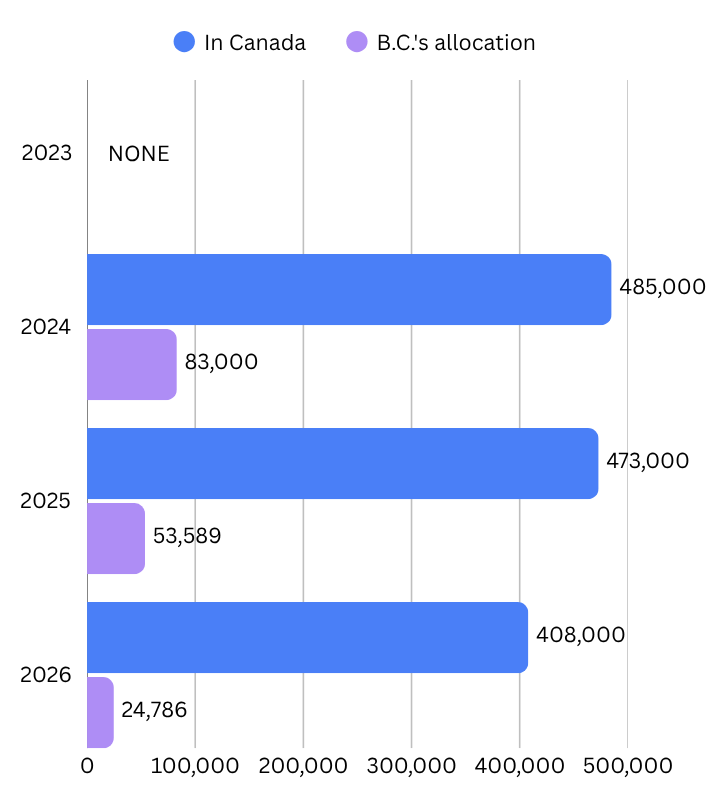
For its part, the B.C. government limited the proportion of international students attending public post-secondary schools to 30%.
But the actual number of international students is declining more steeply than these government-mandated limits as applicants turn away from Canada. Of the 485,000 permits on offer in 2024, only 293,220 were issued.
Going by academic records, the number of full-time international students in public post-secondary institutions in Canada declined 4% in 2024-25 and a further 26% in 2025-26. The sharpest decline, 75%, occurred among new students starting out in community colleges between 2023 and 2025.
New student arrivals in Canada dropped 79% in the first quarter of 2026 compared with the same period in 2024.
A sampling of international tuition fees for undergraduate arts programs at B.C. public institutions in 2025-26:
- UBC = $49,549
- UVic = $33,386
- UNBC = $28,893
- Selkirk College = $13,566
Though it’s hard to draw a direct causal relationship between declining foreign enrolment and program cutbacks, Kwantlen Polytechnic announced 115 faculty layoffs last year.
In a 2023 survey, 70% of international students in Canada planned to apply for a postgraduate work permit and 57% aimed to apply for permanent residence in Canada.
Sources: Government of B.C., Statistics Canada, Canadian Bureau for International Education, media reports