
Thanks to their viral mascara and flattering SPF tints, Ilia Beauty is not only the globe’s most recognized clean beauty brand, but also arguably its most successful. While the company is now a reported $100-million business, its humble beginnings date back to 2009 when Sasha Plavsic started the brand out of her Vancouver home. At her disposal? A $25,000 line of credit and two credit cards.
View this post on Instagram
“I had the idea because of my skin… I had very reactive skin and struggled with hormonal acne, specifically,” Plavsic tells BCBusiness. As a shopper, she perused the Barneys Co-Op floor in New York City, an area reserved for emerging brands. “I was trying to find products that worked for me somewhere between what you’d find at natural food stores and what existed at prestige beauty retailers, and there really wasn’t anything in that middle space.”
That gap sparked the idea for Ilia Beauty, leading Plavsic into a two-year development process for the brand’s first product, a hydrating lip balm, while she was working as a brand executive in the fashion and beauty realm. Rather than attempting to raise funds for her passion venture, Plavsic took the bootstrap approach, funding her own lab formulas from scratch because “nothing ready-made existed” in her category.
It wasn’t an easy road, and between that credit line and two credit cards she racked up around $250,000 in debt over a few years. “I lived in three garages at one point. I lived in East Hollywood without air conditioning, hoping my samples wouldn’t melt in 100-degree heat,” she recalls, noting that bootstrapping requires patience—and it especially did in her case. By 2011, she hit the Vancouver retail scene with her lip balm, now known as Balmy Tint. Early Vancouver fans will recall the products at boutiques Misch on South Granville and the shuttered Blubird on Alberni Street (part of Vestis Fashion Group).
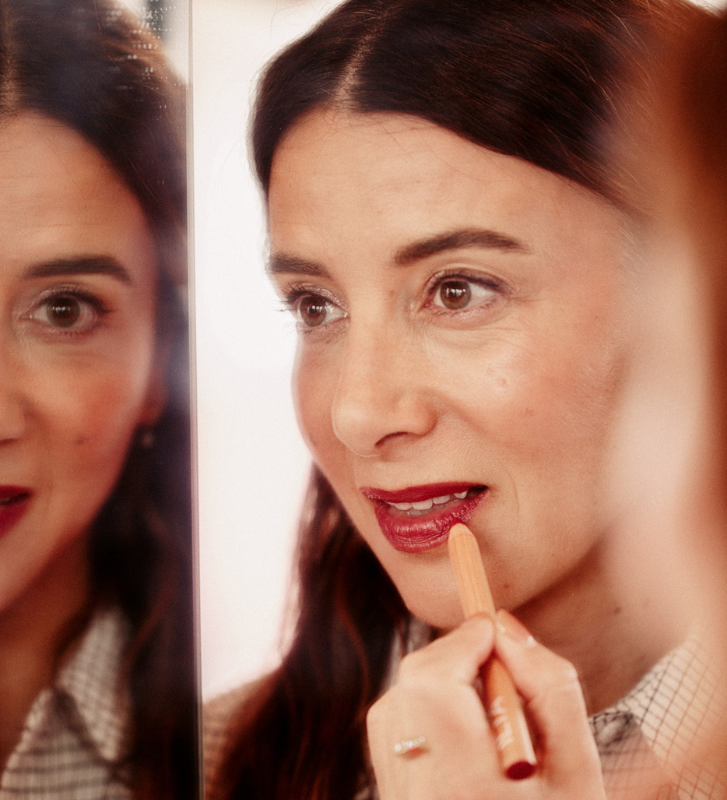
“[Starting up like that] is very hard to do today. I was young and honestly very naive. Instagram didn’t even exist when I started the business, so the landscape was completely different.” Beauty brands have various ways of getting started: launching early on with a major retailer, going the direct-to-consumer route or starting small in boutiques and growing slowly from there. That last one is the path Ilia followed.
“There’s freedom in being small,” she says. “As your business grows, the stakes get much higher. A retailer choosing not to carry a single shade could suddenly mean losing millions in revenue.”
In Plavsic’s case, she was also venturing into new territory with the clean beauty label—a line that isn’t completely organic, and is also not necessarily green. “The category didn’t really exist yet, so I had time to make mistakes,” she notes, adding that “bootstrapping also allows you to hold onto your equity, if you’re thoughtful.”
Plavsic admits that the term “clean” is “unfortunate” in retrospect: “The opposite of clean implies something negative, and it’s also not a regulated term—so every retailer defines it differently,” she says, looking back on the decision from 15 years ago.
“For us, it’s about thinking fully about every aspect of a product: the ingredients, how it performs, how it wears throughout the day, how it removes at night, how it impacts the skin long-term, the packaging, recyclability, sustainability and even how we give back,” she explains.
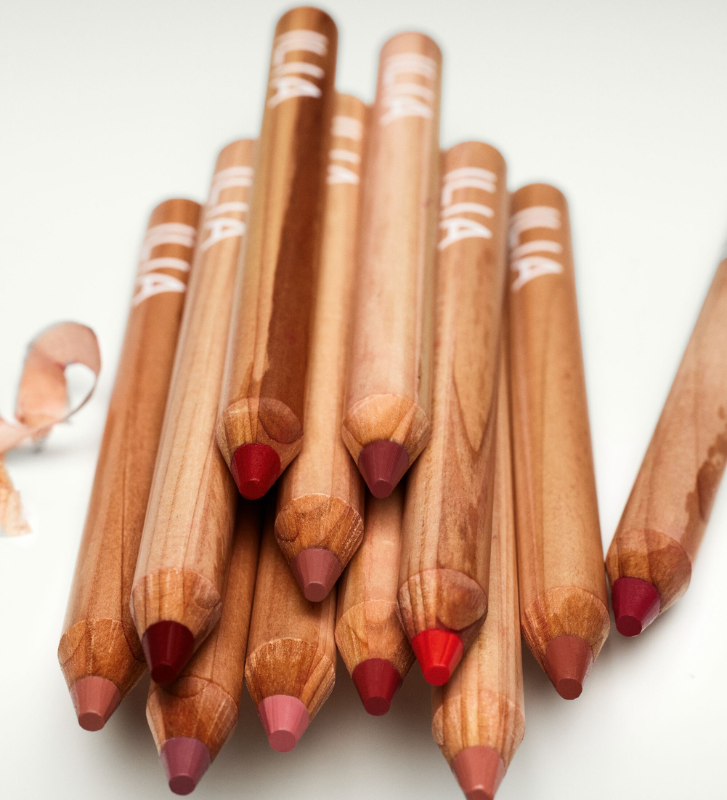
While the brand had developed a Canadian following and was carried by Colette in Paris and Net-a-Porter by 2012, Plavsic began looking beyond the domestic market and down south to California—where she had previously lived and worked. “There’s simply more opportunity in the U.S.,” she says, pointedly. From a population standpoint, Statistics Canada tallies Canada at 41.4 million, while the U.S. Census Bureau clocks its country in at 342.6 million. Translation: there’s a lot more people to sell to, and a lot more people buying. “Moving changed everything,” she says.
“I think building a beauty business in Canada is challenging,” Plavsic adds, revealing she had been turned down by labs in Canada to produce her formulas. “I had already spent years living abroad in Europe and the U.S., so I felt more aligned with the American business mentality. Every country approaches business differently: Europeans tend to want to sit down and talk over coffee. Canadians can move a little slower. Americans move quickly and take risks”
If Plavsic believes Canada can be a harder place to start a business, she also believes Vancouver is a hotbed of inspiration. “We have incredible success stories—especially out of Vancouver. Look at brands like Aritzia, Lululemon, Herschel and Native. These are globally recognized companies that started in a relatively small city,” she says. “There’s also something very inspiring about being surrounded by nature. It gives you space to think creatively and clearly.”
When it comes to building businesses, though, Plavsic sees the U.S. as a more entrepreneurial market. “The culture really supports risk-taking and building something from nothing,” she says. And that’s exactly what she did with Ilia Beauty. More specifically, Plavsic set her eyes on Sephora, the LVMH-owned beauty retailer comprising over 3,400 stores in 35 countries, with around 1,800 of those in the U.S. Outside of that brick-and-mortar presence, Sephora also has a robust online business.
“I had been speaking with Sephora since around 2012, shortly after we launched. In 2015, they sat me down and said, ‘We want to explore this new category called clean beauty, and we’d like you to help define it,’” she explains.
“At the time, there wasn’t really a place for brands like Ilia, but there were a few of us operating in this middle space that would eventually become the clean category,” she adds, referencing other brands in the space, such as RMS Beauty (founded by fellow Vancouverite Rose-Marie Swift), Kosas Cosmetics and Drunk Elephant. “During that meeting, I was very honest with Sephora, and I asked if they knew someone who could help me navigate it.”
So, in 2016, Alison Hahn, then Sephora’s SVP of makeup and fragrance, made an introduction to beauty executive Lynda Berkowitz, who was formerly Bobbi Brown’s vice president of sales, as well as president of Too Faced and Korres Natural Skincare. At the time, Berkowitz was consulting, and she agreed to support Ilia in its next stages.
“She initially consulted for us, but after a few months I offered her equity and asked if she wanted to build this together [and become CEO],” says Plavsic. “Bringing in someone with deep industry experience was transformational.” Plavsic has since credited Berkowitz for transitioning Ilia to a complexion-based company.
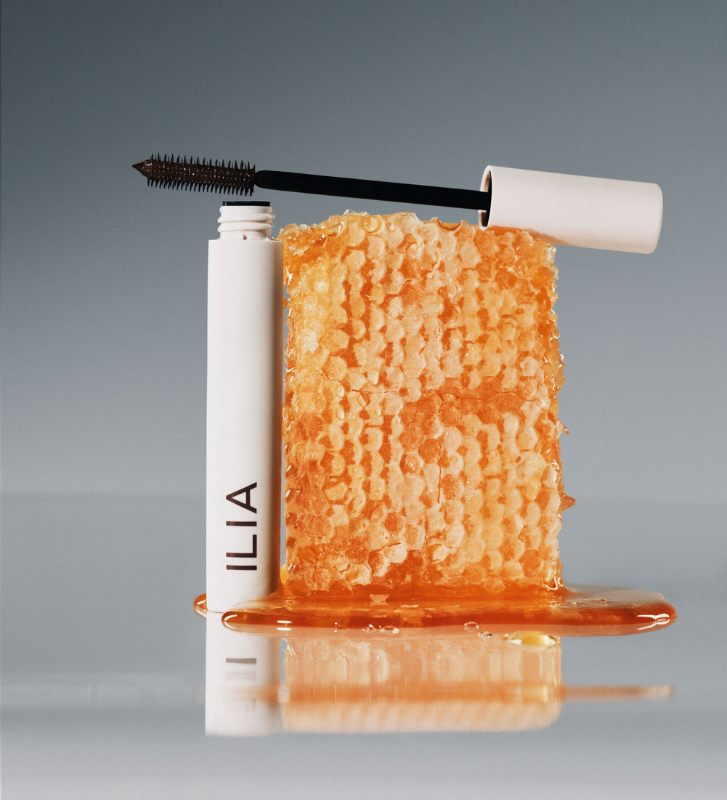
“I think in almost any industry, if you can bring in someone who has experience scaling a company from zero to $100 million, you’re far better off than trying to figure it all out alone,” Plavsic says of Berkowitz’s time with Ilia, which ended in 2024 after an eight-year run. Under Berkowitz’s tenure, the brand launched the Super Serum Skin Tint, which became Sephora’s #1 foundation by 2021. The mascara would follow suit in 2022, coinciding with international Ilia launches in Sephora U.K. and France.
That same year saw the company’s acquisition by Famille-C, the private holding company of the Courtin-Clarins family, for an undisclosed amount, with Plavsic remaining a minority shareholder with full creative control. Currently, Ilia employs more than 160 people across Canada, the U.S., Europe, the U.K. and the Middle East.
“I think one of the most important things is getting profitable as quickly as possible [in the early days], because profitability ultimately determines how much ownership you keep over time,” says Plavsic, who currently holds the title of chief creative officer.
Ultimately, says Plavsic, the Ilia strategy is to be trend-avoidant, maintain quality formulas, and developing relationships with customers. “What we’ve built is trust: trust in how our products perform and how they support the skin. We’ve also built a brand that feels approachable and multi-generational,” she notes.
View this post on Instagram
The Ilia audience is multi-generational, too. “What’s fascinating is seeing how word-of-mouth works across generations,” she explains. “A mother uses our mascara, then her daughter wants to use it as her first mascara. It reminds me of how, when I was younger, you’d get your first Clinique moisturizer sample because your mom used it. That kind of generational trust is something really special.”
The brand also strives to maintain thoughtfulness around new product launches, including 2025’s Eye Stylus Shadow Stick—now the #1 eyeshadow product at Sephora in Canada and the U.S.—as well 2023’s Bright Start Eye Cream, named as Allure’s Best of Beauty pick.
“At the end of the day, consumers need to trust the product. They need to believe it’s the best and feel aligned with the brand’s values,” Plavsic says.
Plavsic notes, however, that a brand’s audience will never understand it quite the same way as its founder, even under new ownership. “It’s your baby. There’s something instinctual founders bring to a company,” she reflects.
Her biggest lesson, she says, has been that there’s a solution to every problem. “As a founder, your job is to creatively problem-solve across every department and every challenge, even if you’re not the expert in that specific area.”
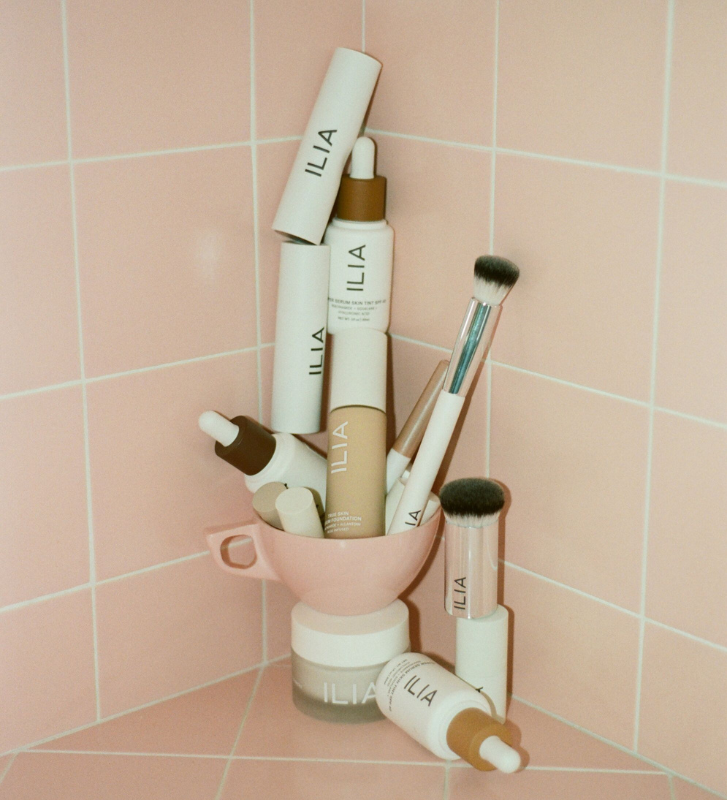
Ilia milestones
- 2011: Launches in Vancouver with lip balm (now known as Balmy tint)
- 2012: Launches at Colette in Paris and on Net-A-Porter
- 2017: Launches on Sephora
- 2017: Limitless Lash Mascara is born
- 2020: Launch of Super Serum Skin Tint
- 2021: Super Serum Skin Tint becomes #1 Foundation at Sephora
- 2021: Acquired by Famille-C
- 2022: Limitless Lash Macara secures #1 spot in mascara category at Sephora
- 2023: Launches first skincare product (with Bright Start Eye Cream and wins Allure Best of Beauty)
- 2024: Start being carried at Ulta
- 2025: Become #1 Eyeshadow at Sephora U.S. + Canada with Eye Stylus Shadow Stick