
A relatively minor wind was all it took, and the towering Stanley Park trees began to fall.
It was December 2024, and a four-year looper moth infestation had ravaged the 1,001-acre park. The City of Vancouver estimated that 160,000 of the park’s 600,000 trees were dead or dying, and Joe McLeod’s team was working around the clock to remove trees that posed a public safety risk. The longer they stayed in place, the less structurally sound they were.
The hemlocks had faced years of drought—a key impact of climate change—which made them more susceptible to the ravenous looper larvae that stripped the trees of their needles. Normally, McLeod would see trees topple only when winds reached 70 kilometres per hour or more, but this time the winds were just 40 or 50 kilometres per hour.
“We saw a ton of failures with these hemlock trees that were dead,” says McLeod, associate director of urban forestry with the City of Vancouver. The trees had been further degraded by other insects and fungi, he adds, and weakened by woodpeckers digging for dinner.
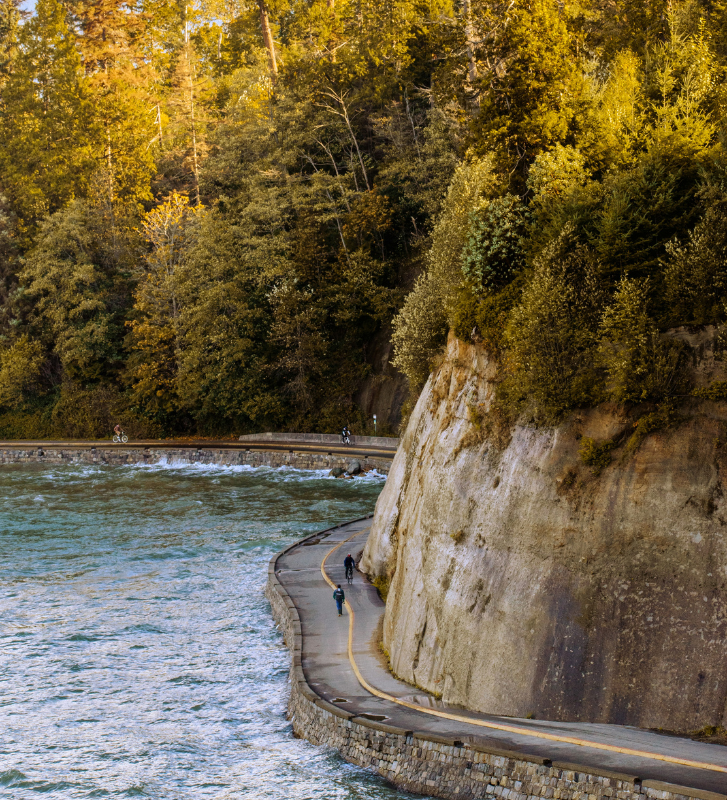
“It was this layering on of all the various forces at play, and then you cap it off with a relatively modest wind event,” McLeod explains. Soon after, 70-kilometre-per-hour winds did sweep through, closing Stanley Park—a tourist mecca that draws 18 million visitors a year, making it the most popular tourist attraction in B.C. and among the most popular parks in North America. The seawall and Stanley Park Train were also shut down, leading to significant losses for area businesses and charities.
When the winds calmed, McLeod took some Park Board commissioners to witness the destruction firsthand. “It was very clear that playtime is over. We need to get serious about this. This is a public safety priority,” he says.
While the looper moth infestation has passed, climate change has not. Since 2024, more than 54,000 trees have been planted to restore the Stanley Park forest—among them Western red cedar, Douglas fir, Sitka spruce, red alder and Pacific yew—but as the drying trend continues, more and more of the park’s treasured tree stands are at risk.
“It’s not so much a single year of drought, because trees are generally resilient enough to handle a year of drought every five or seven years,” says McLeod. “But when you have year-over-year drought, you end up seeing those trees get stressed over and over, and eventually with that stress the cascade of other mortality factors starts to kick in.”
When Western red cedars are dying, for example, you will often find tiny holes in the bark, which point to bark beetles or borers. “They’re the final death sentence for the cedar tree,” McLeod explains. “But the tree wouldn’t have been in that position at all had it not been already stressed from the drought impacts.”
Bruce Blackwell has spent 38 years watching this slow-moving disaster unfold. He began his career as a wildland fire fighter, treading into dangerous areas to help extinguish forest fires. Now his company, Blackwell Consulting Ltd, takes to the skies for a different reason: they do forest health assessments to track forest trends across the province, looking for signs of drought, disease and infestation. They also provide on-the-ground management, from tree risk assessments to urban green space planning to wildfire planning.
Blackwell says the stress on the trees and the increased forest fire risk is being exacerbated by our longer, drier summers. “Historically we would’ve had significant rains in April, May and June. And in some of these driest years, the precipitation is stopping in May,” he says. “And we’re not getting significant precipitation for months on end.”
As a result, municipalities are having to rethink the trees they plant, and opt for the hardier species that are most likely to survive climate change, and pose less of a threat to public safety and infrastructure. Still, a lack of rainfall isn’t the only type of drought that regional governments are battling.
“These things take resources—and when it comes to green spaces, we’re good at planting them, and we’re good at saying we’ve got these beautiful features, but we’re not managing them to the standard we need to manage them,” says Blackwell.
“And if you have to remove the trees, as you’ve seen in Stanley Park, the financial problem is even greater because it’s so expensive. You’re not recovering any revenue, and moving a lot of dead biomass is very expensive. You’re talking tonnes.”
Turning a blind eye comes with even bigger costs, says Josephine Clark, natural resource management planner with Metro Vancouver. She’s seen firsthand how the combination of shifting temperatures, drought, flooding, pests and invasive species—including bark beetles, budworm, root rot and mildew—are threatening popular parks and recreation areas across the Lower Mainland, from Pacific Spirit Park to Lynn Headwaters to Campbell Valley Regional Park. According to a 2025 provincial government forest health survey, the Western spruce budworm is now affecting over 130,000 hectares of forest along the Sea to Sky corridor—up from 61,000 hectares just one year before.
But urban forests do far more than provide memorable experiences for tourists, outdoor enthusiasts and families, says Clark. They also store enormous amounts of carbon, reduce flooding, cool neighbourhoods and act as a buffer against storm surges and sea level rise. “They’re providing all these services, and their ability to provide those services will be reduced if they aren’t healthy,” says Clark, who points to a study finding that every dollar spent on climate adaptation yields over $10 in benefits. “Even if you don’t care about them for nature’s sake, you should, because they’re helping protect you from future climate change.”
Clark and McLeod agree that the composition of Lower Mainland forests will shift over time. Some tree species might disappear entirely, while others that are more typical in warmer, drier locales like California could start putting down roots. Experts predict the frequency and severity of weather events like atmospheric rivers and heat domes will increase, further weakening the trees that millions of visitors come from around the world to see.
Today, a major wind event like the one that did so much damage to Stanley Park in 2006 would come with even more devastating consequences, and infestations that were once localized nuisances—one looper moth outbreak in 2000 affected only a small area of the Coquitlam watershed and other dispersed areas—could fell entire forests.
Still, McLeod is confident that while Vancouver’s green spaces might look decidedly different as the climate continues to shift, they aren’t going anywhere.
“I am confident that there will still be an urban forest. There will still be trees. Nature is far more resilient than we give it credit for,” he says. Urban trees come with all kinds of intangible benefits, McLeod adds, from better medical outcomes to higher retail sales.
“But there needs to be an understanding that there’s going to be some tree mortality and changes to the urban forest. My hope is that the community is patient with that change, and will understand that it’s probably inevitable.”