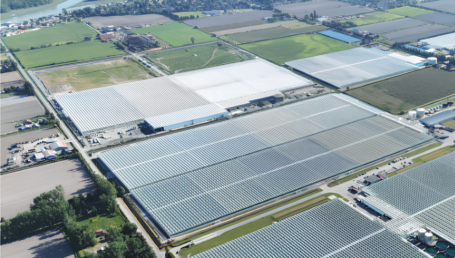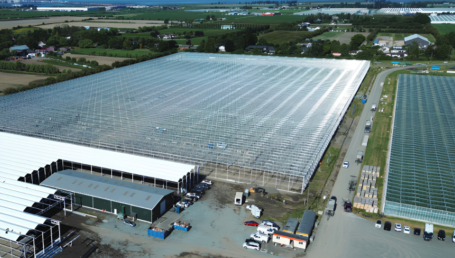

The Highland Valley Copper mine is vast, in more ways than one.
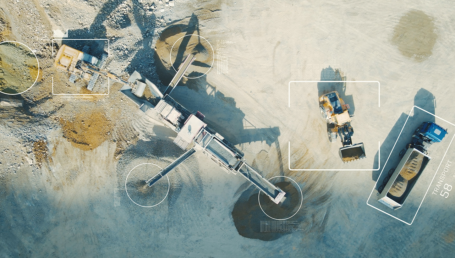
Less than an hour’s drive West of Kamloops, it carves a bright white slash through the greenery. The constant bustle of activity produces hundreds of thousands of tonnes of copper per year across a roughly 50-square-kilometre mine site—part of a much larger project area spanning more than 500 square kilometres. In fact, its size makes it one of a highly select group of Canadian mines that are visible from space.
More than that, Highland Valley Copper has also been vast in its impact on the province. Its Mine Life Extension project is expected to sustain around 1,500 roles after construction. In 2025 alone, it generated over $1.8 billion in revenue.
That means that this single mine accounts for around 10 percent of the province’s overall mining income. For every year it remains in operation, about half a billion dollars will be directly contributed to B.C.’s GDP in the form of wages, taxes and more.
“It’s amazing the impact that these big projects can have in a place like B.C.,” says Michael Goehring, president and CEO of the Mining Association of BC. “It’s a nice little economic engine for the provincial economy.”
That engine is powered by a mosaic of mines around the province, but mainly by a relatively small number of large, high-producing projects, like Highland Valley Copper.
Highland Valley Copper is also Canada’s only producer of its second product: molybdenum. Molybdenum is used in making high-grade steel, mostly for industrial applications, which makes B.C. oddly important to the global steel-making industry; Canada is also the world’s of the specialized form of coal that is used in making steel.
Still, it’s the copper that makes the mine truly important. Copper underpins everything from renewable power stations to AI datacentres, and these days it can be used to secure not just profit but also national strategic stability in the face of potential global shortfalls.
Copper, like molybdenum, is one of many such critical minerals, but it’s the only one that B.C. currently produces in large amounts.
Far more remote than Highland Valley Copper, near the town of Iskut and almost eight hours north of Prince Rupert, is the Red Chris mine, which also extracts primarily copper. It only produces about a third as much copper as Highland Valley Copper, but it also produces a far more intrinsically valuable secondary product to go along with it: gold.
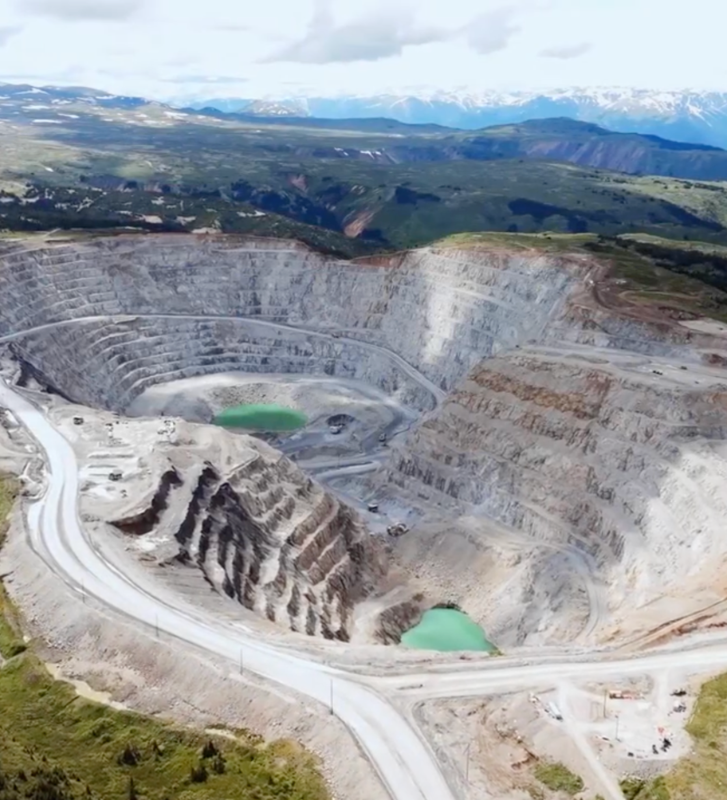
Gold has always been a part of the B.C. economy, to some extent; the famous Eskay Creek mine, which is near to Red Chris, was once the single highest-grade gold mine on earth. Though it closed in 2008, the site is currently undergoing a revitalization that would see it reopen in 2027 as an open pit mine like Red Chris.
A full 92,000 ounces of salable gold came out of Red Chris in 2025, but the copper–gold porphyry deposits themselves are relatively low in copper grade, with the gold helping to improve the overall project economics at scale. In terms of capital, it’s the sort of project that requires the biggest and most specialized of operators; in 2023, the site was acquired by Newmont Mining, one of the largest gold producers in the world.
Newmont is transitioning the site to a “block cave” operation, which sees miners dig under deposits rather than blasting down from above, and which can potentially get at enough extra value to keep the mine in operation for decades. This will pay for the continuation of hundreds of permanent jobs, and the creation of hundreds more in contract jobs specific to the transition.
That makes the mine vital to the prosperity of the Tahltan First Nation, members of which make up at least a quarter of the mine’s workforce. The Nation has supported the block caving transition in order to keep the mine operating as the heart of the local economy.
The level of support these sorts of large mining operations require is what often makes them important in remote areas; it’s not just the salaries of direct workers at the mine itself that can drive a local economy, but also the revenue generated by all the businesses that support those workers.
“Our Blackwater gold mine creates around 900 jobs presently,” says Steven Dean, founder and executive chair of Artemis Gold. Though the Blackwater mine is still spinning up operations from its opening in 2025, it’s already projected to become B.C.’s largest single gold producer in just a few years’ time. Dean estimates that once that expansion is complete, the total number of jobs on the project will be around 3,500.
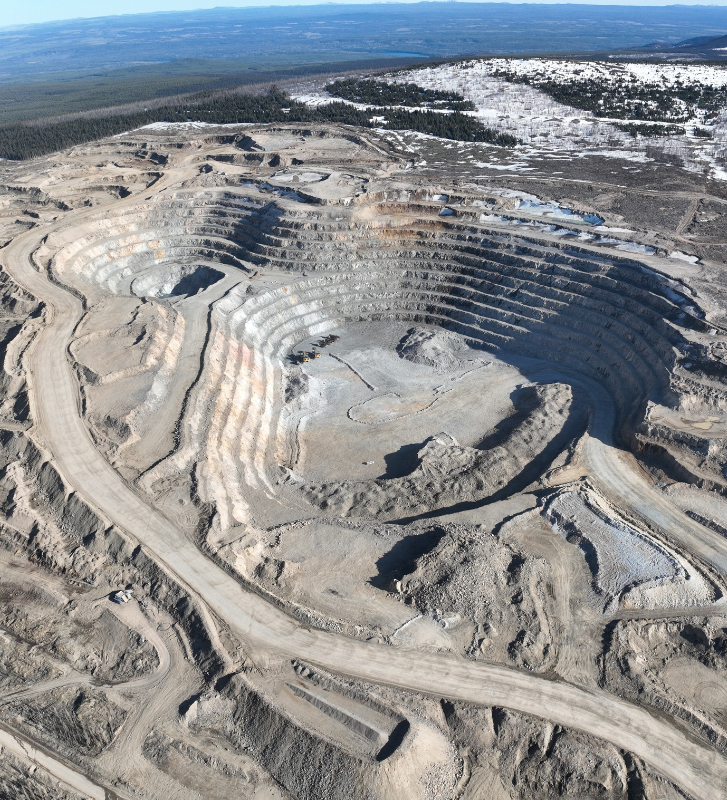
As with Red Chris, building with the cooperation of local First Nation leaders has led to a 25 percent share of Indigenous people in Blackwater’s workforce.
“Very few companies in Vancouver can do that,” Dean says. “We can provide jobs in areas where Indigenous people can both live and work on their ancestral land.”
Such a concentration of capital creates a multiplier effect for more than just the local communities. In 2022, province-wide goods and services spending from the mining industry was $3.7 billion, with $1.4 billion of that spending centralized in Metro Vancouver.
That potential for larger-scale impact is what’s bringing national attention to B.C. mining, as the federal government looks to fast-track a few projects that will extract minerals of global importance. Like what has already been seen with copper, the focus continues to shift from the products that have traditionally had the highest value to those that can provide ruggedness for Canadian industry in the face of disruptions in global supply.
Large multinationals are taking notice as well. Most notably, a massive upcoming merger will see Vancouver-based Teck Resources combine with British mining company Anglo American, but there is also investment interest on the level of individual mines.
There is Newmont, which found its way into B.C. copper and gold production by buying and directly operating Red Chris. Conversely, Wheaton Precious Metals has taken the increasingly common indirect path to investment known as streaming.
Streaming is the practice of providing seed funding—often hundreds of millions of dollars—before a mining project kicks off in exchange for ongoing rights to a portion of the mine’s future revenues. Wheaton, for example, provided such funding for the Blackwater mine. Now, the company has access to profit made from the mine’s sale of gold, and also from its secondary product, silver (last year, the metal was classified by the U.S. Geological Survey as a critical mineral, making it increasingly sought after). Wheaton also recently closed the largest streaming deal in history, a US$4.3-billion arrangement for income from silver extracted by the Antamina mine in Peru.
The growing popularity of streaming in B.C. has resulted in an influx of international cash. Together with more concerted attention and support from the provincial and federal governments, that investment is making large, widely impactful mines seem more achievable.
“In recent years, we’ve faded a little bit, but we’re on our way back,” says Goehring.
“We have a generational opportunity in front of us. If we can seize it, B.C. can become a powerhouse of the Canadian economy.”