
In February, Prime Minister Mark Carney laid out a new path for Canadian industry, one that would work to end dependence on outside nations while creating new, high-paying jobs throughout the country.
To hear Association for Mineral Exploration (AME) president Todd Stone tell it, though, there’s no guarantee that B.C. will be able to leverage its incredible resource wealth to support or even benefit from this plan.
View this post on Instagram
“We’re facing policy and regulatory challenges that hold us back from moving at the pace that Canadians are expecting,” he says of the mineral exploration sector. “If we’re going to be successful at building out the Canadian military, at supplying our allies in NATO and around the world, then we need to have a heightened sense of urgency here at home to get these critical resources out of the ground.”
It might seem like an odd perspective. After all, AME is an industry advocate organization with the aim of boosting B.C. mining on behalf of explorers, scientists, supply chain providers and more. As such, AME says that mining exploration in B.C. is a lucrative industry that brought in about $750 million in investment in 2025, up from around $550 million in 2024. The picture seems even rosier with respect to so-called critical minerals like lithium, cobalt and the rare earth elements used in modern, high-end electronics; annual growth in critical minerals investment has been over 100 percent in recent years.
In fact, critical minerals have become so important to the province’s economic plans that in 2022 the Eby government struck a new Ministry of Mining and Critical Minerals; in 2025, the turn toward resource independence greatly increased that ministry’s importance. “B.C. has a big role to play,” says Jagrup Brar, the province’s minister for mining and critical minerals. “The Canadian list has 34 critical minerals. We have the capability to produce 22 of those in B.C.”
Already, both new technologies and global uncertainty have pushed B.C. to become the country’s largest producer of copper, and its only producer of the increasingly valuable element molybdenum. “The situation is sort of a perfect storm,” says Paiement, chief technology officer at mineral discovery software platform VRIFY. “It creates a rush to produce resources at home.”
Many have called it the beginning of a boom, especially in critical minerals, one that some expect will pay dividends for decades to come. But not everyone sees the same picture.
“Unfortunately,” says Stone, “there’s always a story behind the story. Those dollars are massively concentrated with a small number of advanced projects, major ones that are close to the finish line.”
And the junior and mid-sized mining companies that generally take on riskier explorations and find unexpected new deposits? “They are really struggling,” he says.
One of the main causes, as admitted by all sides, is the permitting process. The issue isn’t the proportion of applications that are rejected, but rather the length of time that it takes for an application to be approved.
“Permitting is a thorn in everybody’s side,” says Andy Randell, CEO and principal geoscientist at geo-consulting firm SGDS Hive. “The theory was that it would be 30 days for the government to process it, 30 days for First Nations feedback, and then four to five days after that you would have the permit issued,” he says. “In reality, it was never happening like that.
“I’ve had applications that have taken over 18 months.”
The result has been an inability to plan for income or raise money, which in turn can lead to an inability to keep employees on payroll. At times, the backups can get so long they eventually impact people at every level of seniority. “I went and worked in a pet shop for a while,” Randell says with a smile. “I mean, I loved it. But that was not making use of my education.”
The province is certainly aware of the issue, with its 2026 budget increasing funding for hiring in the ministry’s chronically understaffed permitting department. Paiement does admit to having seen some improvements, and Randell notes that he was pleasantly surprised recently to see a theoretically 120-day application be returned in a mere eight months—still twice the allotted time.
“It’s clear that times need to come down, so that’s what we are doing,” Brar says. “We have reduced major permitting application timelines by 35 percent, which could be more than a year and half in savings of time.” This has translated to an almost one-to-one effect in the real world, with a 34 percent increase in exploration permits approved over the same period.
Still, new federal policy seems to call for a much larger increase in domestic capacity, with the federal Defence Industrial Strategy alone calling for a 240 percent increase in defence industry revenue. If it’s going to be achievable, that sort of increase in production will require massive amounts of critical minerals, and the federal government seems to know it. While it’s too early to know what the impact will be, new federal funding announced in March looks to provide a total of $127 million to the various levels of B.C. mining.
It’s debatable whether federal authorities expect even this increase to allow Canadian sources to be capable of providing all the critical minerals needed, on any timeline; earlier this year, Canada established new “formal mechanisms for critical mineral cooperation” with Germany, Australia and Saudi Arabia, adding to existing deals with the U.K., the EU and more.
In the end, though, permitting and regulatory back-ups can only be blamed for so much of the gap between B.C.’s productive capacity and its real-world output. And there is one more issue cited by all sides, one that could end up being much more difficult to address.
“I constantly struggle to find people,” Randell says. “It’s a generational thing. The people who are being produced by the university system right now, they don’t want to work in this industry.”
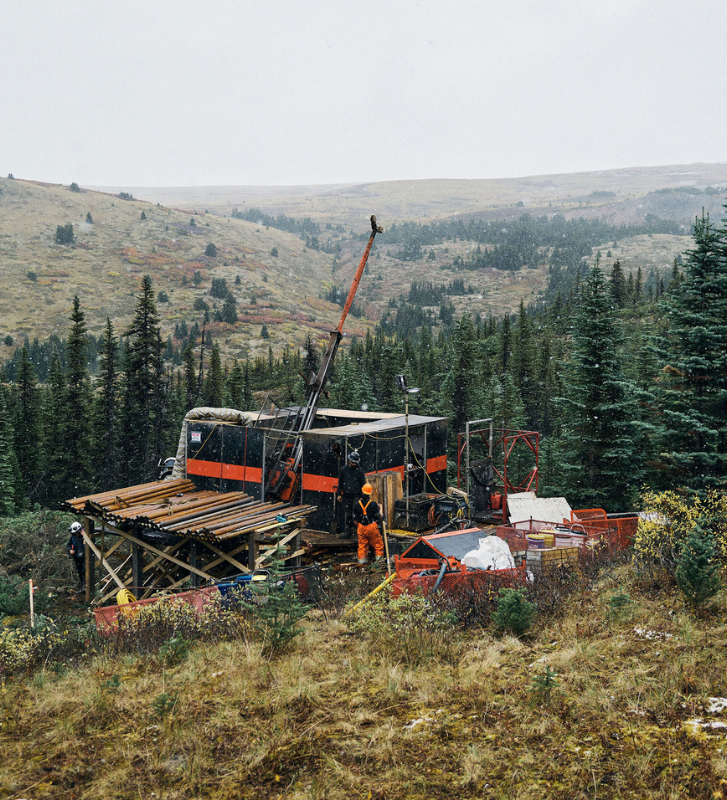
The trouble there seems to be a fear of the factors that often come along with the job of mineral prospecting, especially in more remote areas of the province: potential isolation, and the physical and psychological hardships of being away from home for extended periods of time.
“The generation that preceded mine,” Paiement says of the industry, “were brought up in the world where you had to spend three months in a tent, without a cell phone, sleeping on the ground. New graduates just aren’t attracted to that.”
Brar and others in government are well aware of this issue, and are working to mitigate it in whatever ways they can. In particular, B.C. has seen the introduction of $241 million in funding for education to build out a strong mining workforce, and the continuation of the Center of Training Excellence in Mining.
“The message to the mining and exploration sector is to build and grow,” Brar says. “We will ensure that there are skilled workers ready when they need them.”
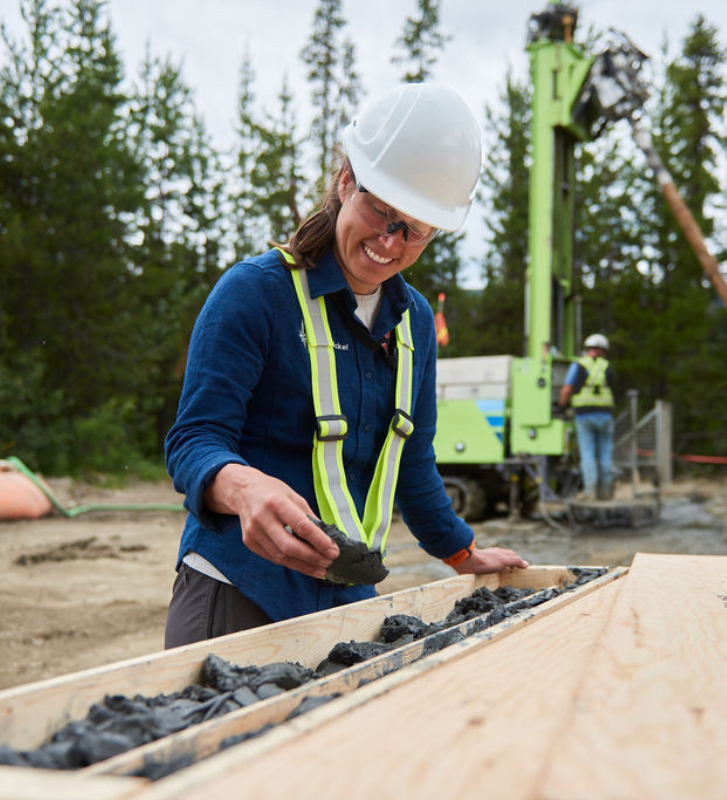
If that’s going to work with the modern crop of university graduates, though, adjustments to the work itself are likely needed. The VRIFY platform uses AI to go through existing forms of survey data to highlight the likelihood of mineralization and refine drill targets, and to do it faster and more accurately than legacy systems. While technologies like this by no means do away with the need for fieldwork, they are helping to reduce the number of people required in the field, and the number of days they’ll need to stay there.
“Automation, remote work, remote driving,” Paiement says. “These things can help with that.”
Generational change, however, is affecting recruitment through larger attitudes about mining as well. Many are expressing worry that the push for increased exploration will lead to lowered environmental standards, and that it generally represents a move away from public consultation on major development projects.
“It’s often painted as a dirty industry and a lot of younger people don’t want to come into it because of that misconception,” Randell says. “But, coming into this industry, you don’t have to butt up against destroying the natural beauty of B.C. Most of us got into this career because we like the outdoors.”
He adds: “At the end of the day, it’s better to be an agent of change from within the industry, rather than to be outside of it, complaining.”
That seems to be the mentality in the industry right now: while there are problems, they must not overshadow the incredible potential of B.C.’s resources. The exploration portion of mining does the necessary work of generating leads, taking the early risks that allow later developments to deliver value to the industry, the province and the country
Much of government policy is currently downstream of exploration, meaning that if it backs up, so too do the large-scale national projects. The mining exploration industry in B.C. seems more than ready to rise to the challenge set out in federal policy—if they’re given the freedom to do so.