It’s a damp, grey morning near the abandoned former mill town of Woodfibre on the western shore of Howe Sound. Families moved away from here in the 1960s, leaving their homes to be demolished. Western Forest Products Inc. shut its pulp mill down in 2006. But today, the ground reverberates again with the sound of heavy machinery as teams of workers construct an LNG terminal to one day ship liquefied natural gas to Asian ports.
Enormous modules of tubing and pipes rise skyward against the rainforest backdrop. A bald eagle casually supervises crews in hard hats and high-vis clothes. But Woodfibre is still a ghost town without any houses, restaurants or stores. Instead, workers for contractor McDermott International and various subcontractors eat, sleep, shower and relax after hours aboard one of two white ships anchored at the docks.
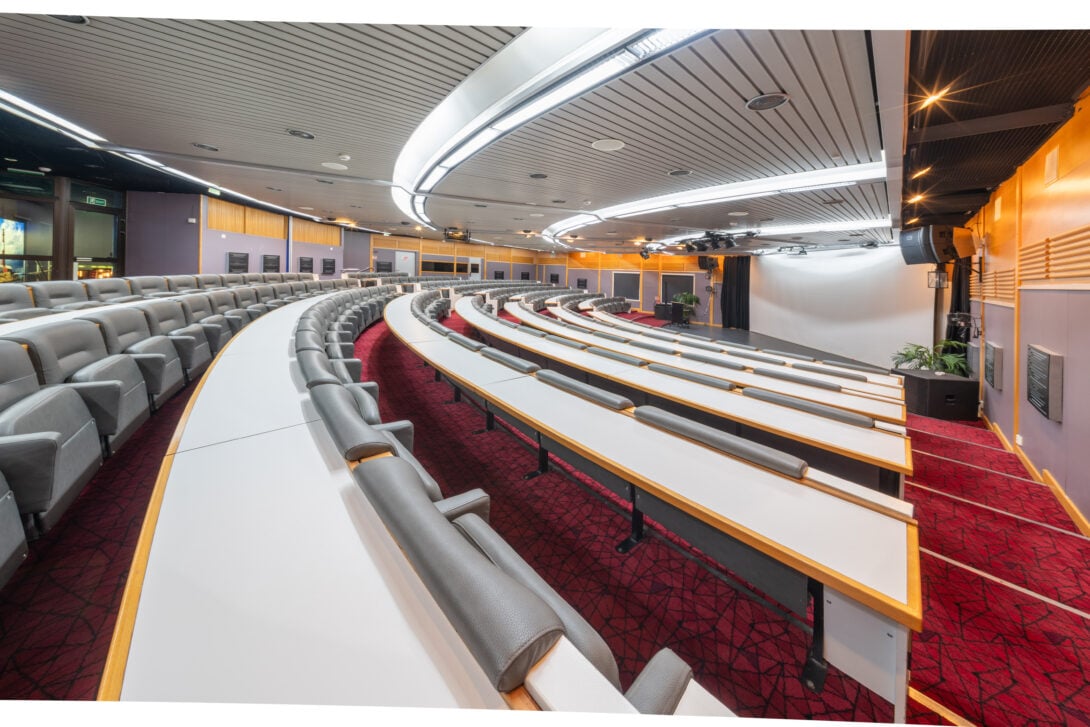
The MV Isabelle X and MV Saga X are floating hotels, or floatels, operated by Vancouver-based Bridgemans Services Group. Each is a former cruise ship that Bridgemans refitted to house near-shore workforces in remote locations—and refitted again specifically for Woodfibre. They’re towering boats that are built to accommodate more than 600 residents each, along with dozens of the ships’ crew members. They were originally constructed as luxury overnight ferries to take passengers and their cars between ports on the Baltic Sea. Guests onboard today won’t find vacation frivolities like waterslides and night clubs, but they will enjoy comfortable cabins, restaurants and gyms equipped to forge Olympic teams.
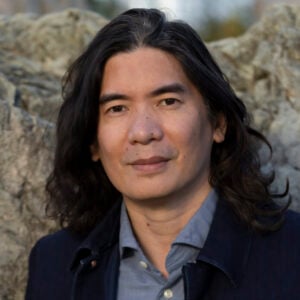
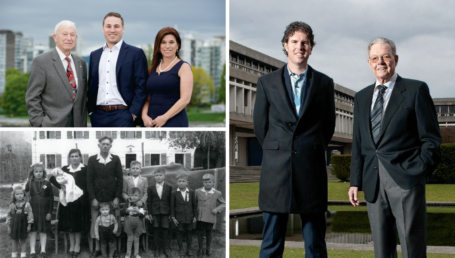
These floatels are the realization of a vision Bridgemans founder, CEO and president Brian Grange had before he started the company in 2013. It’s also a homecoming for a company that spawned in B.C. waters but left to feed on opportunities around the world before returning for the start of Woodfibre LNG’s construction in the fall of 2023. But while many companies lose their culture and humanity as they expand, Bridgemans’ team members have only grown closer over their decade wandering the globe together. As he leads his company, Grange (who was on the cover of this magazine last fall as EY Entrepreneur of the Year 2025 Pacific overall winner) carries lessons imprinted on him from childhood summers spent working at his family’s fishing lodge in Haida Gwaii. Bridgemans is a fast-growing business with a global footprint and employees from around the world, but B.C.’s shores are still its home.
Grange grew up in Toronto, but spent his summers in B.C. His father Rick founded West Coast Fishing Club with partner Brian Legge in 1988. Grange was cleaning fish at age 11, then guiding clients by his early teens. “I’d spend 10 hours on the water in a little Boston Whaler, working,” Grange recalls from Bridgemans’ boardroom in Vancouver.
Those summers taught Grange to rely on his wits and to work hard, independently. “It was the Wild West,” he explains. Visitors then were still allowed to venture out on “self-guided” boats—which often meant unguided and lost in thick fog in the days before GPS. Grange would hop in a boat and rescue them. “I just had this really keen sense of geography and navigation,” he remembers. “That’s what really founded my sense of adventure and my sense of determination—anything’s possible and nothing’s impossible.”
Grange still has a hand in the family fishing business, but he always wanted to start a company of his own. He saw the potential for LNG development on the coast, and his years working with the community in Haida Gwaii gave him the insight and foundations to build what would become Bridgemans.
Nearly half the islands’ people have Haida ancestry, and see themselves as stewards of the land. Grange understood that any development on B.C.’s coast must start with good relationships and approval from local communities and First Nations (Bridgemans is currently partnered with Squamish Nation on LNG project development). He asked himself: “How do we create accommodation that can be floated in and floated out?” That would eliminate the need to build land camps in the forest, causing environmental disruption lasting longer than the time needed to get a project built?
The fishing lodge business also taught him how to operate in remote locations—albeit on a smaller scale. “I mean, we just had a small fishing lodge, but you would have to import all your goods in,” Grange explains.
He looked at businesses servicing oil fields development near Fort McMurray, Alberta. He saw opportunities to apply what he knew about relationships and logistics to the LNG boom when it arrived in B.C. Bridgemans, however, started out in a different sector—providing floatel services to the workers at Bechtel Group Inc. who were modernizing the Rio Tinto Alcan Inc. aluminum smelter in Kitimat from 2014 to 2015. The company secured a partnership with Haisla First Nation, and Grange thought it would be clear sailing for them from there. “Around 75 percent of that workforce was Haisla Nation members as our first project,” Grange recalls. “So we thought we had created the secret sauce. We’ve got this great floatel project available now. We’re going to be able to do that for all the LNG that was coming on the West Coast.”
The LNG projects didn’t materialize, however, at least not in B.C. Global petroleum prices plummeted, and business investment in the industry collapsed. Fortunately, Chevron Corporation contracted Bridgemans in 2014 to provide floatel services for the completion of its Gorgon LNG plant in Western Australia. And so, the company began a global odyssey that would include projects housing workers for various industries in the Bahamas, Belgium, Estonia, Germany, Trinidad and Tobego, Eastern Africa, Norway and the Philippines.
Floatels occupy an odd niche—they’re cruise ships that seldom set sail, and their residents are onboard to work, not play. They require specialized ship crews, and vessels tailored to house remote workforces. Even though a Bridgemans floatel might stay moored at one location for months, all crew members must be seafarers—they’ll have seafarer safety certifications and “passports” that facilitate travel and shore leave. Grange earned his seafarers papers in Estonia.
Seafarers also have special attributes and a culture of their own. They’re used to being away from home for long periods of time, and have to be able to enjoy living and working in close quarters with their colleagues.
That seafarer’s way of being is embedded in Bridgemans’ culture. The floatels’ crew members live and work aboard the same vessels as the client workforce. They eat in the same dining rooms. So Bridgemans works to make its floatels genuinely feel like home—environments where everyone can find a healthy work-life balance. “Creating that culture within the floatels is uber-important, because you want to be able to, one, keep the workforce happy, but also, two, to retain your crew,” Grange explains. The company designs its living areas to be open and relaxed, while physically keeping the world of work at bay.
On this morning, Sergii Liaschenko, Bridgemans’ senior operations manager, is guiding a small group of prospective business partners through the Saga X. We enter on the former car deck, which is now lined with rows of custom-made, heated lockers. Moisture from sweat or rain clings to workers’ clothing in the cool, damp climate of B.C.’s coast, so Bridgemans outfitted the lockers with heat and ventilation for drying after the Saga completed its 18-month project in the Philippines.
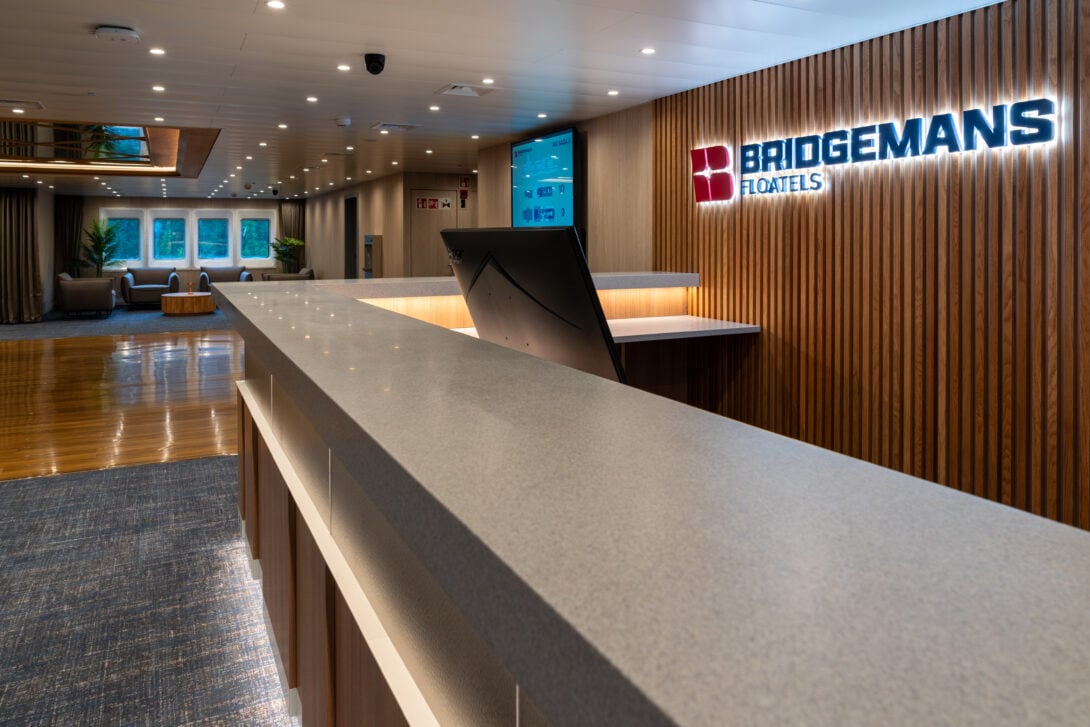
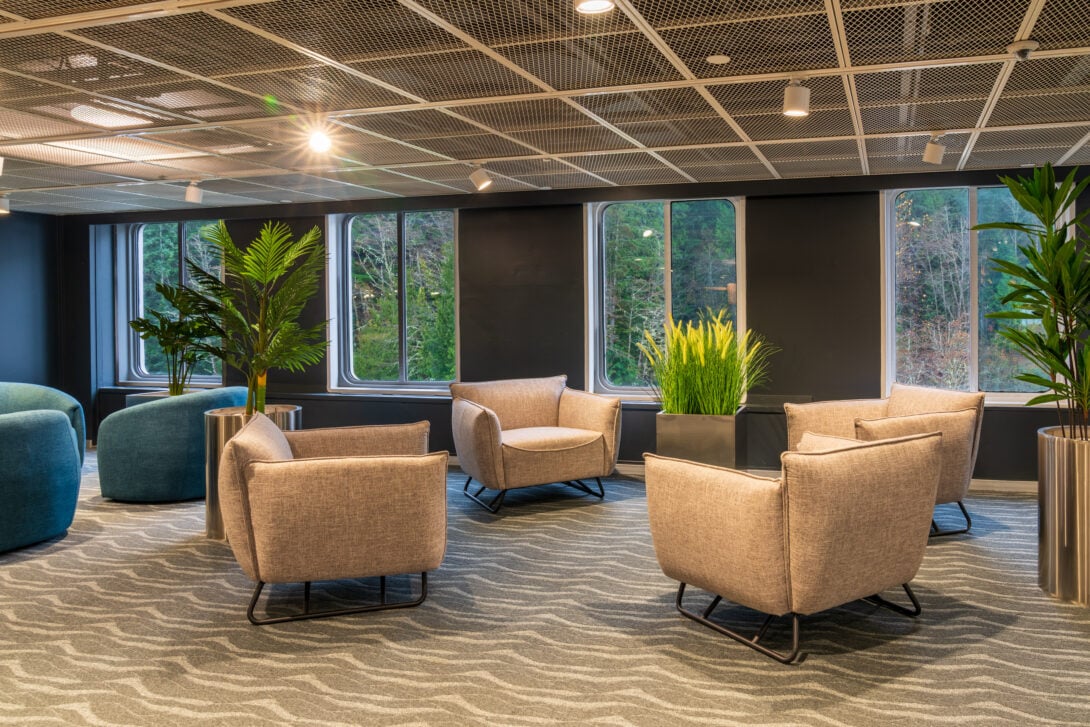
Once Saga X residents enter this locker room, they leave their working life behind. They shed and deposit their helmets, boots and other work attire here or in the adjacent laundry. Then, they go upstairs—and they’re home. We emerge from an elevator onto a deck with a reception desk, along with a coffee lounge with plush chairs. The seats are all designed and arranged to kick back, relax and socialize—this isn’t a Vancouver laptop café. Only a few residents are onboard instead of at the worksite. They stroll by in jeans and flannels like dads on the weekend.
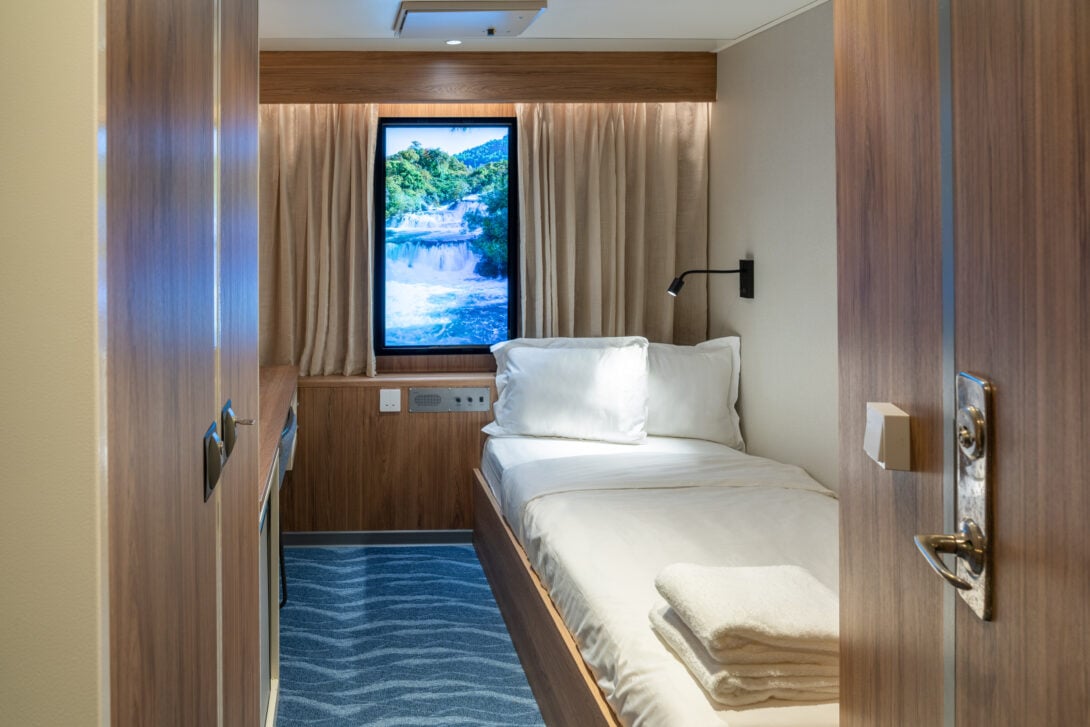
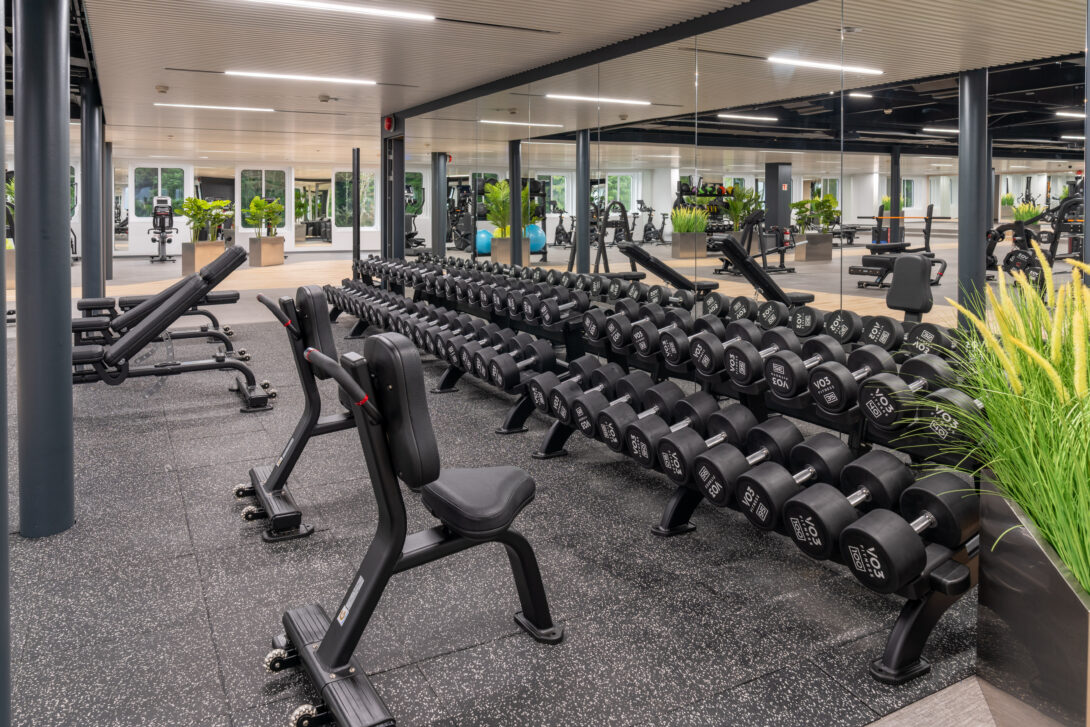
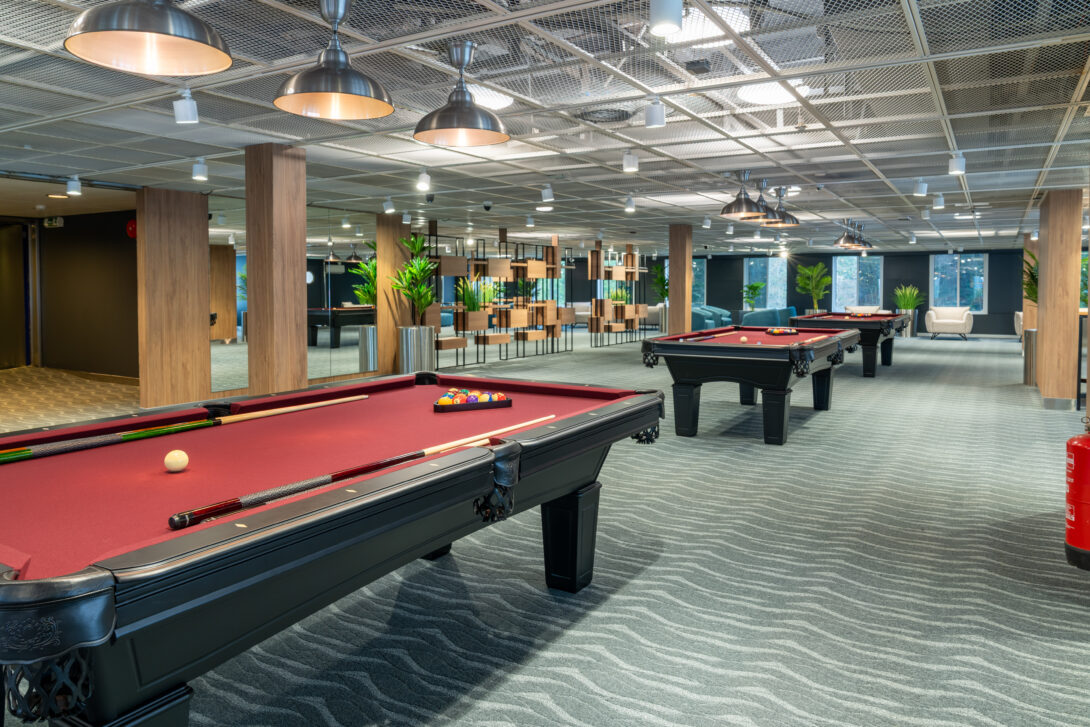
The cabins where residents sleep are comfortable, but compact. Vast lounge areas with pool and foosball tables, big-screen TVs and chess boards are far more inviting places to wind down. The lounges have even comfier chairs—the kind that are easier to plop into than get up from. Like the lounge, the games area is designed for people to be social, but there are also quiet nooks and a library for those who want time to themselves.
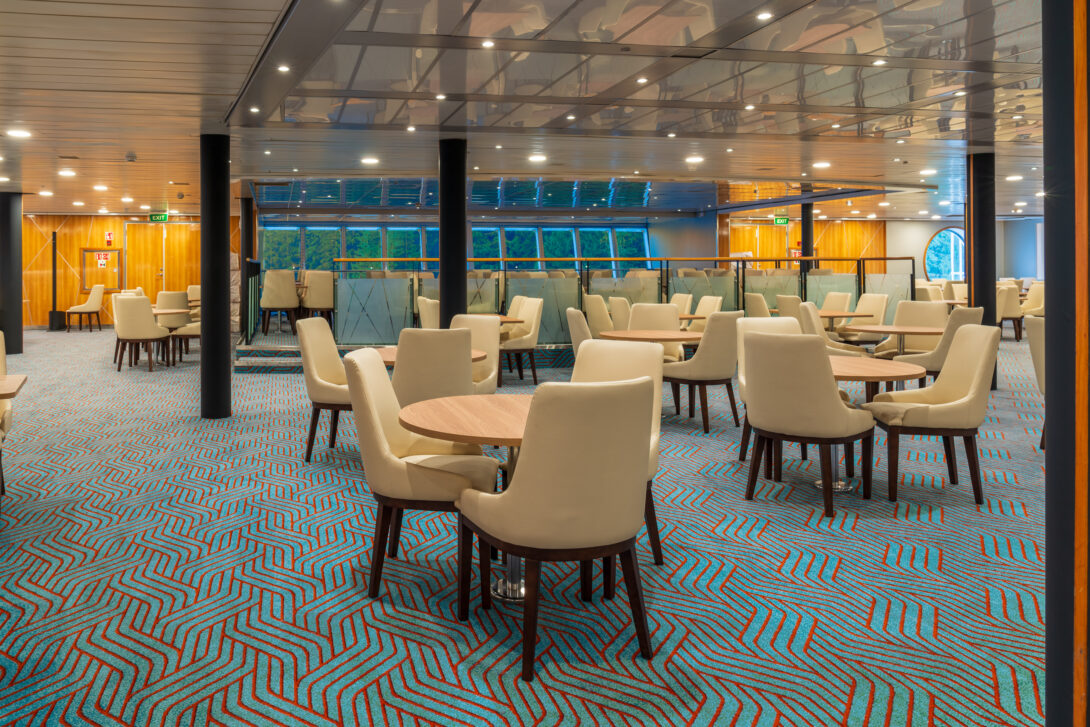
Liaschenko leads our group to the dining room. It takes up about a third of a deck in area, but is nearly empty at lunchtime. Today’s menu features Filipino specialties like beef nilaga and pancit canton, but most residents would have taken meals from the floatel’s Grab & Go café for their workday. There, they face a daunting assortment of options like pasta, chicken and waffles, and tuna sandwiches—all packed into reusable containers. Single-use packaging or bottles are notable by their absence; Bridgemans offers reusable bottles and filling stations instead. Hundreds of people live aboard, eating 1,800 meals a day, and neither garbage nor recycling trucks will be sailing across Howe Sound for pickup.
Every time Bridgemans signs on for a new project, it must figure out a fresh set of logistic details and client needs. Each new site will require finding new food suppliers. Bridgemans gives local farmers reusable crates for their vegetable deliveries, so there’s zero waste to manage. Different nationalities of workforces will want different menus and amenities on the ships.
Nobody knows the day-to-day details of Bridgemans floatels better than Liaschenko. As the person in charge of floatel operations, he’s responsible for both of the Woodfibre ships, plus another ship operating in Mozambique. But he also knows the company’s history and the culture of its seafaring crew. He started as a steward in the laundry room 10 years ago, and worked his way up and around the world on projects in Europe, Australia and the Philippines.
Liaschenko speaks in crisp, efficient sentences, like a man used to converting chaos into order. He is. He focuses on issues like policy development and quality control now, but in his last role he managed day-to-day operations for a floatel in the Philippines. “Every two minutes you’re switching to a different subject,” Liaschenko explains when we talk again the following week. “You’re dealing with transportation, medivac, provisions, a uniform order not arrived, board delayed, VIP visitors coming, need to approve menu with client. You totally change your subject every five, seven minutes, and you need to make the right decision.”
He pauses as if to take a breath, and smiles. He says enjoyed the job because it was challenging—a constantly changing puzzle to be solved: “It’s easy if you have the skills; if your brain is set that way.”
Liaschenko grew up in Odessa, Ukraine, where he earned an engineering degree then worked as a bank economist. His mother had been a seafarer in the military when she was young. She once asked her son if he’d ever consider a life at sea. He laughs as he recalls telling her, “Never! Never!” Back then, he couldn’t imagine life away from friends, or from a future family.
Politics destabilized Ukraine’s banking sector, with weakened banks collapsing after Russia annexed Crimea in 2014. Liaschenko found work as a cruise ship steward before deciding the partying lifestyle on those ships didn’t suit his calm personality.
He saw a job posting from Bridgemans, offering what looked to him like an opportunity for stability. Liaschenko is a man with education and skills—did he see the steward job as a stepping stone to something more? “No, no, no,” he says emphatically. He’s not the kind of person who chases accolades. “I just want to do what I like to do, and enjoy what I’m doing.”
Keeping everything nicely organized is one thing he likes. “That’s just my nature,” he confesses. “I cannot break it.” Brian Grange remembers being shocked by a laundry room that Liaschenko had organized when the new steward was working on Bridgemans’ now-retired MV Bluefort.
“The entire place was colour coded; all the sheets perfectly folded,” Grange recalls. “We were like, okay, well, you know, we’ve got to work with Sergii.” The next day, Bridgemans promoted Liaschenko to housekeeping supervisor. He had only been with the company for three months by then.
Liaschenko’s story represents how Bridgemans has grown as a tightly bound, multinational team. “Every time we went to a particular spot, we would find two or three individuals that would stand out amongst the local hires that we would have, and we would bring them with us to the next project,” Grange explains. The “base” of the company, he says, is this group of people who have been together for 10 to 15 years, collected from different communities all over the world. “They are all seafarers at the end of the day.”
Surely, after all these years of shared growth and adventures, Bridgemans must feel like a second family to Liaschenko. Does it?
“Not the second. It’s the first family,” Liaschenko asserts. “This is my family. These people who we work with through many years—different projects, different challenges—we are not just friends.”
Liaschenko emphasizes that the family culture at Bridgemans is about bringing people closer together, not keeping people out: “It’s not only about who is here longer—no way. We have some people who are here two years, but they become family, because you need to be a team player.”
Bridgemans is now working to add new family members from its home waters in B.C., especially from B.C. First Nations. The company operates a small-vessel fleet of various tugs and cargo transfer boats in addition to its floatels. It provides training opportunities for First Nations members to earn certifications toward seafaring and small-vessel captain careers. “We can’t hire enough people locally fast enough, because there’s just not enough people with their certificates,” Grange says, highlighting the worker pipeline issues that have become an increasing challenge for the firm. “So we’ve got a training program in place right now for the floatels to get everybody with their certificates locally, because there are not enough Canadian seafarers with qualifications to operate large passenger ships.”
Selena Basi is Woodfibre LNG’s vice president of corporate relations. She says her company looked at other housing options for its construction workers, but Bridgemans stood out for its commitment to the Squamish First Nation and close relationships with its members.
For example, Basi cites Bridgemans’ willingness to address the local community’s safety needs. Industrial work camps bring in labourers from outside the region, and historically, that’s put Indigenous women and girls at particular risk for harm. “So having a non-local workforce in the community was something that was of concern to the Squamish Nation, and Bridgemans was right there with us to find ways to mitigate those concerns,” she explains.
Woodfibre LNG aims to begin shipping LNG near the end of 2027, and will no longer need floatels to house construction crews. But Basi notes that Bridgemans provides marine transport of materials and people to the site, and her company will always need those services: “There’s lots of opportunity for future collaboration.”
Grange says he’s excited to train new crews of locals and take them out into the world: “I’m really looking forward to the next adventures, for that reason alone—finally getting to bring our Canadians with us to new projects.”