

It’s no secret that British Columbians are feeling financially strained—many are preparing for economic decline and anticipating that the cost of living will continue rising, according to an MNP Consumer Debt Index from January.
Increased financial stress can impact people in many ways, but it can notably take a toll on their day-to-day in the workplace. According to the National Payroll Institute, more than half of Canadians report that financial stress is affecting their performance at work.
“Much like mental health was a taboo topic a few decades ago, financial health today is silently affecting a huge number of employees, and there’s a lot of shame associated with it and a reluctance to talk openly about it,” says Antonio Zivanovic, CEO of ElektraFi, a workplace financial wellness empowerment platform. “We’re seeing the stigma around money talk starting to lift, but there’s still progress to be made.”

Not only can financial strain be distracting (as well as stressful), it can also lead to burnout and even employee attrition. One solution? Financial wellness programs. Employers can lead the way in promoting financial well-being—and there are significant incentives to try.
Canadian research shows that 70 percent of employees believe their employer should support financial well-being, and 91 percent of respondents from a 2024 Wealthsimple survey reported higher commitment to employers that provide great financial wellness. Paycheques are a start, but employers that help employees maximize their money get them to stick around longer and spend less time worrying about finances at work.
Feel financially well
Financial well-being starts—but doesn’t end—with transparency. Clear compensation communication should be accompanied by the tools to enable employees to build a more financially secure future.
With ElektraFi’s Total Compensation & Rewards module, the platform helps employers reduce burnout and turnover by making compensation, equity and benefits visible, understandable and actionable for employees.
“Most financial wellness benefits just educate or advise. ElektraFi actually integrates into people’s financial lives,” says Zivanovic.
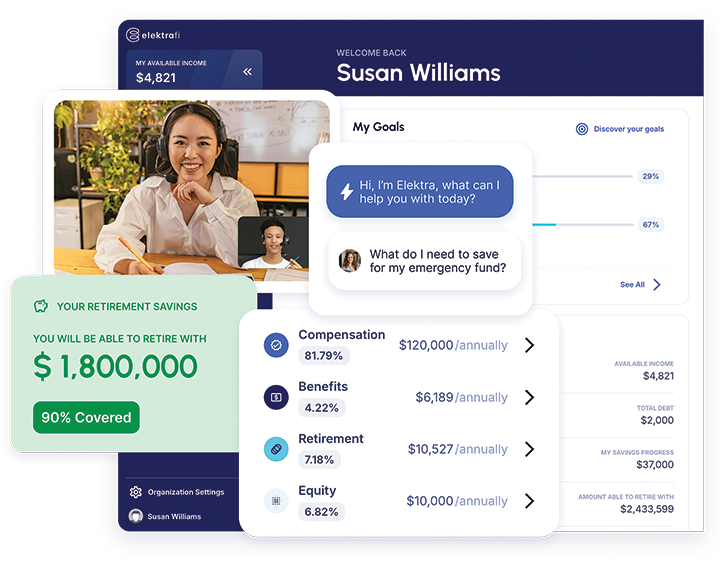
For employees, ElektraFi is like having an always-on financial expert in their pockets (thanks to the platform’s app connected to their accounts and synced in real time) that keeps them on track. Employees can also access on-demand, one-on-one sessions with Certified Financial Planners.
“Their pay, benefits and accounts are all centralized, then we layer personalized guidance that helps them achieve their individual financial goals,” says Zivanovic. “Whether it’s getting out of debt, getting on the property ladder or just getting ahead, ElektraFi is making it happen for Canadians.”
For employers, it gives them the ability to communicate the value of what they invest in their employees. They can measure the uptick in retention and financial well-being through ElektraFi’s analytics, seeing the ROI on existing compensation and benefit spending in real-time.
Financial well-being matters. It’s not just a wellness benefit or a perk. It’s a tangible performance lever that builds trust and leads to meaningful change in employees’ lives and your workplace.
See what financial well-being can do for your organization with a free 14-day trial with ElektraFi. Learn more at ElektraFi.io.
Connect on LinkedIn.