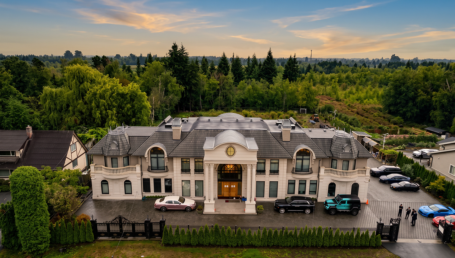

For decades, the business model for the land owned by the British Properties group in West Vancouver was all about large, lavish single-family houses. The company sold the land to builders at first and let them build those palaces. Then BP started doing its own custom builds in 2000, selling packages for homes.
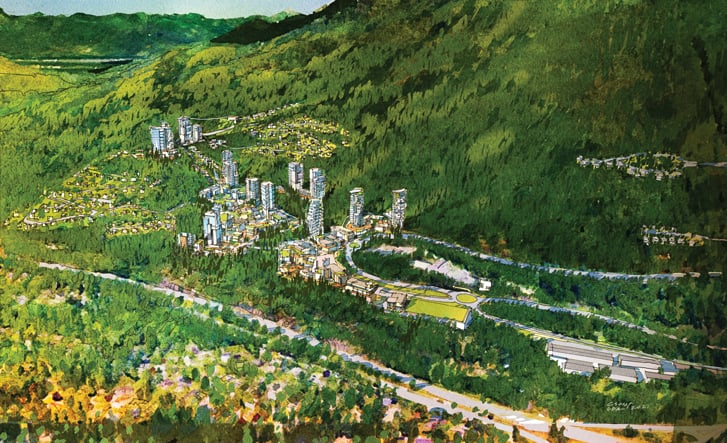
But that’s all changed, says BP vice-president Bryce Tupper. The custom-home building ended earlier this year. And the project occupying the time and energy of West Vancouver’s historic landowner is now very different. These days, it’s all about Cypress Village: townhouses, apartments, towers and a few detached homes in a compact community, where the preoccupations are all about making sure that the new cluster is well served with transit, school space, shops, services and community amenities for the 7,000 people expected to live there by 2050.
A little more than 75 kilometres to the east, another “village” is going up. Highstreet Village is being developed by AB Wall on a piece of land that feels, at first drive-through, like the parking lot of the adjacent mall. The 600-home development, next to the Highstreet Shopping Centre in West Abbotsford and a hop away from the Trans-Canada Highway at the Mount Lehman exit, is a world away in feel (and undoubtedly in price) from West Vancouver’s Cypress Village.
But, like Cypress, the Highstreet development has emphasized a focus on how much there is for future residents besides just the home. The project, on the site of a former wire and steel factory, emphasizes the nearby shopping, transit, highway, schools, parks in its promo material.
Those two projects are not in any way unusual in the Lower Mainland world of suburban development, which has evolved a long way from the 1950s style of home construction that was all about mass production of generic bungalows sprawling endlessly on green fields at the edges of cities.
That has been the stereotypical image of suburban development, one that was revived recently when the New York Times’ housing reporter, Conor Dougherty, did a major piece in the paper’s weekly magazine making the argument that fussy and boutique efforts to supply housing through infill in large cities were not going to be enough. Dougherty argued that beating the housing shortage will require massive construction projects on those green-field areas. The article was accompanied by, yes, a photo showing a sea of generic bungalows sprawling endlessly on a flat plain.
That kind of sprawl development is not unheard of in Canada. Even in the Vancouver area, you can still see the occasional new subdivision arising on the fringes that seems to be following the 1950s model (think: Burke Mountain).
But Canada in general and Vancouver in particular are tilting ever more toward all the different kinds of homes that are not Dick and Jane houses set amid big lawns, unlike the United States, where older patterns still prevail.
The U.S. Census Bureau documented that 63 percent of the 1.627 million new homes built there were single-family style, with only 37 percent multi-unit.
In contrast, only 11.3 percent of the new homes in B.C. built in the first eight months of 2025 were single family. In all of 2024, 12.7 percent of the 46,196 new homes in the province were single detached, following a two-decade-long decline in single-detached homes. The major shift the last two years has been toward more rentals instead of condos, but the share of multi-family overall just keeps growing.
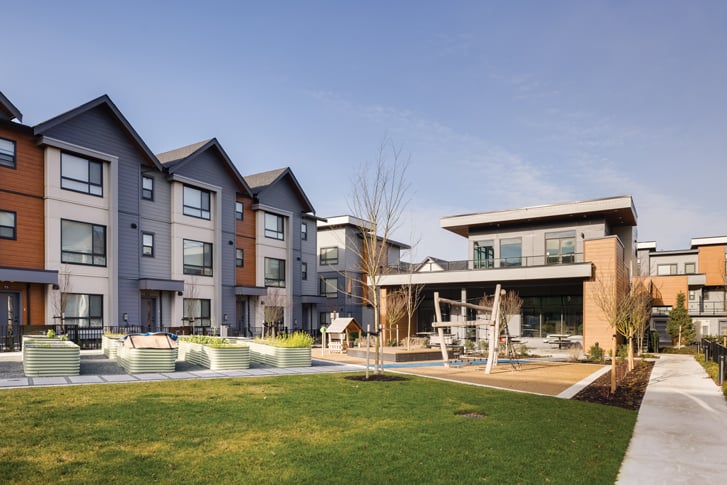
So, yes, you can motor around the edges of the region (as I’ve been doing ever since COVID days as a way to pass the time and discover the many worlds of what was once known as the Greater Vancouver Regional District) and see some hillsides covered with new mansions, but you’re far more likely to see dozens of new townhouse, rowhouse and small-apartment projects, along with sprinklings of towers here and there in the larger suburbs.
I hesitate to attribute this trend to any one specific cause. Every time I ponder the housing market, it’s all too clear that it’s a vast ecosystem that is formed by dozens of forces, some of them hard to spot easily.
But I do wonder if there’s something about the Canadian personality that just rejected the idea that owning a house had to be under the kind of miserable conditions that American humourist Erma Bombeck described so pithily in her 1950s and ’60s columns about the new suburbia: a world of nothing but generic bungalows, no community built in, muddy streets and inadequate services, boredom.
Here, it seems like developers have become convinced that new residents for their projects just aren’t going to put up with that kind of bleak isolation any more. When I talked to Alf Wall about his West Abbotsford development, he spent a lot more time in the conversation discussing the advantages of everything around his project than the actual homes themselves. A big transit hub. A shopping centre. The highway. A Safeway grocery store right next door. He and his company have little interest in growing a field of houses on agricultural land.
“We don’t buy farmland,” he said. “We buy land that is generally already [in the official community plan].”
And they’re watching what people seem willing to buy in the suburbs. The big faux-farm estates that used to be an attraction 30 years ago, no. “We’re building condos smaller and smaller all the time.”
In West Vancouver, I hear the same from Bryce Tupper about Cypress Village, where the development will be 94 percent multi-family units.
“We have a different set of cornerstones now. What’s considered necessary: a community centre, community commercial, banks, dry cleaners, places for daily needs, childcare, transit.”
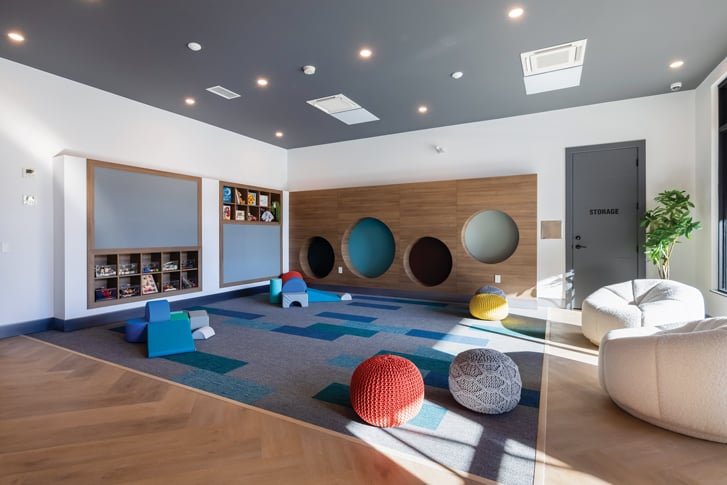
The company is so committed to providing transit that it is planning to fund its own shuttle bus from the village down to the established bus lines down the hill. It is building trails to connect with the forests around. It is talking to the school board about setting up a small annex primary school in the village right from the beginning.
“We’re constantly thinking about how do we make sure those pieces of regular daily life are there.”
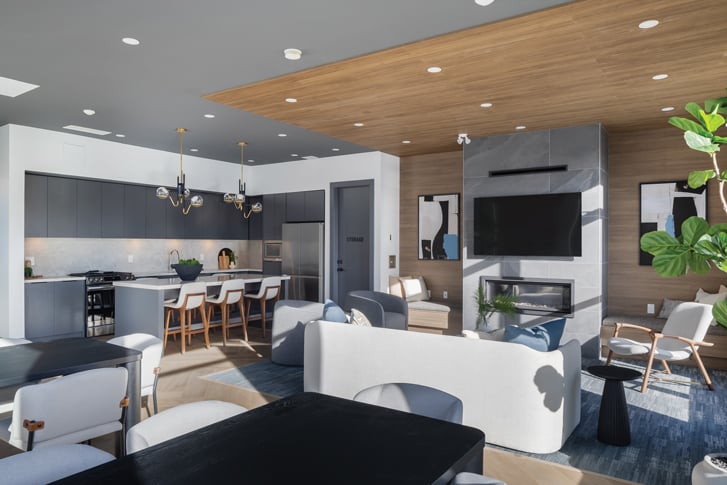
The company is very aware of its big shift in focus. “We’re seeing this as our generation’s version of building the Lions Gate Bridge. It’s a big move,” Tupper adds.
The ironic thing is, most people in B.C. don’t even recognize these kinds of developments as big moves. These are just the norm for this corner of the continent, where the culture is shifting so that it’s okay with not necessarily having the big yard and the two-car garage. Enough room for the two or three kids inside, sure, that’s important. But as much or more so: having a community on the doorstep, not a suburban wilderness.