
In a speech to the business community in May, following the Trump administration’s imposition of tariffs on Canadian exports, B.C. Premier David Eby singled out the province’s North Coast and Nechako regions in his plan to respond to the new world economic order taking shape.
“Today, communities in B.C.’s northwest—near the Alaska and Yukon borders—stand on the brink of a generational opportunity: to build lasting prosperity for our province and nation through true partnership with First Nations, while conserving the lands and waters we all depend on,” Eby said. “This region is rich in critical minerals and precious metals—the building blocks of modern life and the green technologies of tomorrow, from electric vehicles to wind turbines. As global demand for these minerals is projected to grow fivefold by 2040, B.C. has a vital role to play.”
Indeed, the area north of Stewart has long been known in the mining exploration business as the Golden Triangle for its mineral abundance. It already has a handful of mines in operation and several more are in development, aided by new road and electric power infrastructure. The province is working towards agreements with First Nations and other stakeholders that will help expedite project approvals in the northwest and across B.C.
The North Coast is likewise a linchpin to Canada’s export diversification efforts for its port and energy transportation infrastructure. LNG Canada, the country’s largest ever capital project, commenced operations in Kitimat in 2025. The first liquefied natural gas terminal to be built on the Pacific Coast of the Americas, it is designed to export 14 million tonnes of LNG to Asia per year, equivalent to around 8 percent of Canada’s entire natural gas production in 2024.
Two more LNG terminals, Cedar LNG and Ksi Lisims, are in development on the North Coast. In March, natural gas producer ARC Resources signed a 20-year offtake agreement with ExxonMobil LNG Asia Pacific for approximately half the planned throughput for Cedar LNG. A joint venture between Pembina Pipeline Corp. and the Haisla First Nation, Cedar LNG is scheduled to come into service in 2028.
Gateway to the Pacific Rim
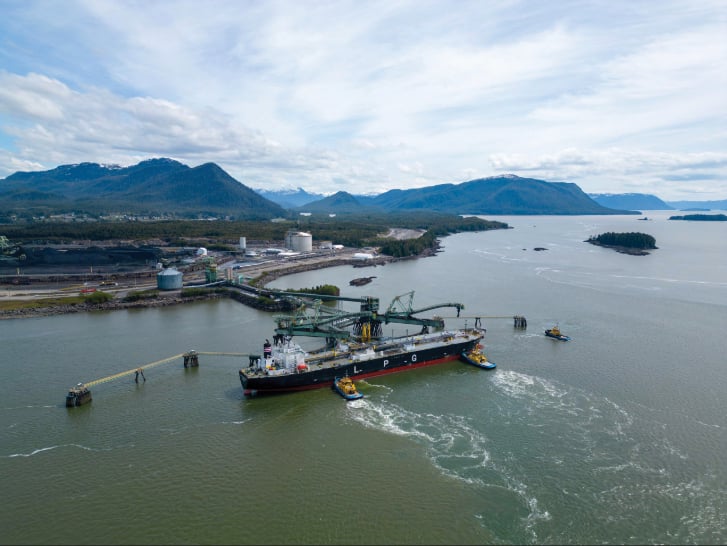
Prince Rupert, meanwhile, is at long last coming into its own as the North American port served by transcontinental railways that is closest to Asian markets. Its Fairview container terminal, opened in 2007, continues to take business from more congested ports in Metro Vancouver and the U.S. West Coast. Port upgrades in progress include the $1.35-billion Ridley Island Energy Export Facility, a liquified petroleum gas (LPG) and methanol terminal, as well as South Kaien Logistics Park and CANXPORT, to support transloading, container storage and breakbulk operations.
With the completion of Wolverine Terminals’ marine fuelling project, which allows visiting ships to refuel using fuel barges, “now we’re a full-service port,” says Paul Vendittelli, the City of Prince Rupert’s director of economic development and transportation. In June, Trigon Pacific Terminals committed a further $750 million to build a second LPG terminal at its existing bulk terminal capable of exporting 2.5 million tonnes of LPG beginning in 2029.
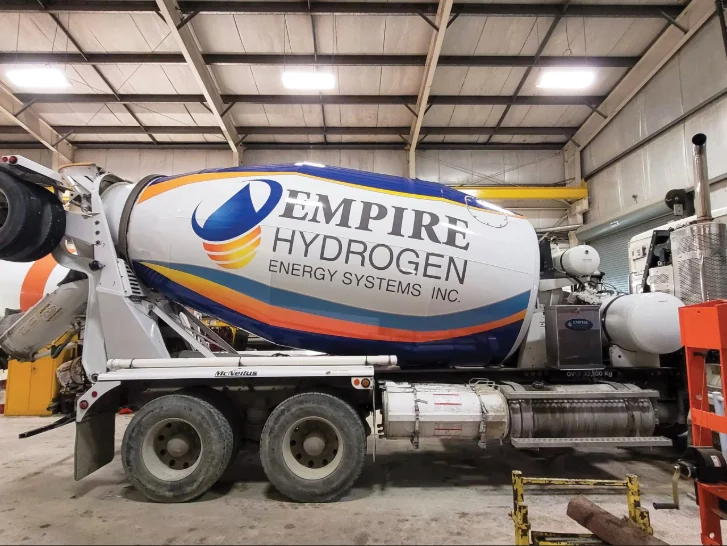
Part of the effort to create a “hydrogen corridor” providing the emission-free fuel for heavy equipment and transport trucks between Prince George and the North Coast, Empire Hydrogen Energy Systems this year set up portable fuel stations in Smithers, Kitimat and Prince Rupert. Prince Rupert is also working with Hy2gen Canada to develop a facility on city-owned Watson Island to produce and export hydrogen and hydrogen-based feedstock. And last year Source3 Energy X signed a memorandum of understanding with the City of Terrace and the Kitselas First Nation to develop a clean hydrogen hub at the Skeena Industrial Development Park in that city.
Though the forest industry in the northwest, as in other regions, has been hampered by timber supply declines, low commodity prices and tariffs, innovation points to new opportunities. In late 2024, for example, Chrysalix Venture Capital of Vancouver committed funding to Deadwood Innovations for the purpose of building a plant in Fort St. James that can turn aspen and other waste wood into lumber using a thermo-chemical process. The project, in partnership with the Nak’azdli Whut’en First Nation’s Nak’azdli Development Corp., promises to make use of wood hitherto left to rot.