

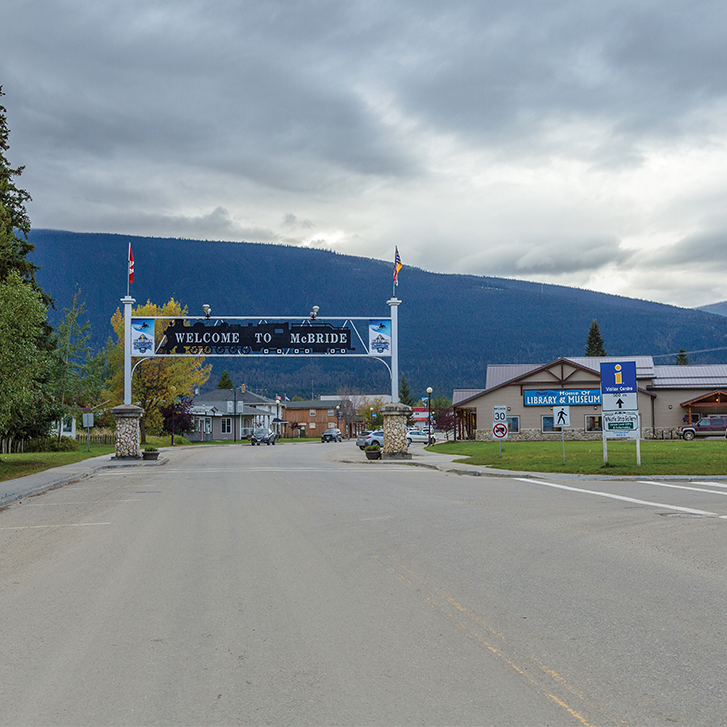
When the Bank of Nova Scotia decided to close its branch in the village of McBride, a farming, logging and railway town of 600, in 2023, Dan Wingham sensed an opportunity. His employer, Integris Credit Union, had recently bought an insurance agency in the village. The local chamber of commerce, which had reconstituted itself after a COVID-19 hiatus, invited him to a meeting at McBride’s public library. So Wingham, manager, partnerships for Integris Credit Union, drove more than two hours from his home in Prince George to find some 50 residents gathered. He sensed their fear at the prospect of losing their only financial institution.
Asked to say a few words to the assembly, Wingham made one thing clear: “We’re not in the save-the-day business. We’re in the financial cooperation business.” After a rocky experience stepping into a similar banking void in Fraser Lake, Integris needed the community to play its part building the business case for opening a branch in McBride. The credit union needed both individuals and businesses to switch their accounts. For its part Integris rented a room in the library for a pop-up branch every other week for several months to facilitate account transfers until it could open a full-time branch in a disused former Airbnb property in March 2025.
For its Restoring Financial & Economic Stability in McBride, B.C. project, Integris would go on to win the 2025 Community Project Award (Population less than 10,000) from BCEDA. But for the credit union, the bigger prize was the loyalty it won in the community.
“By the time we opened our doors in March of this year we had almost achieved all our goals to the end of 2025,” Wingham says.
B.C.’s heartland
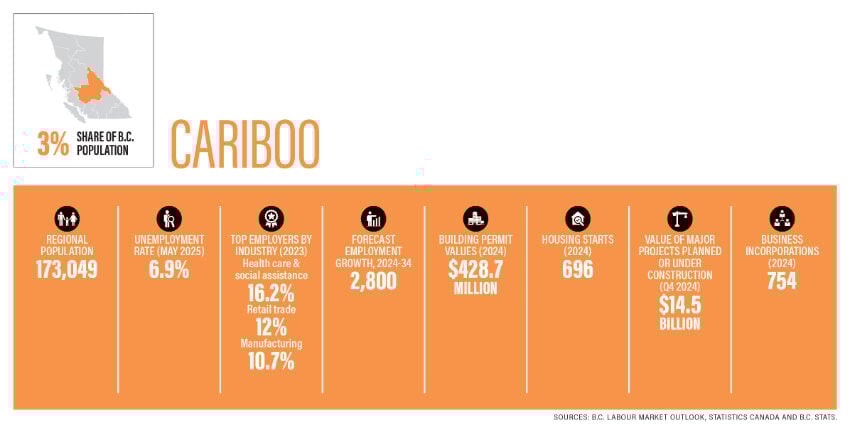
The Cariboo, spread across the plateau country at the centre of B.C., features several small, out-of-the-way settlements like McBride. It also includes Prince George, B.C.’s northern crossroads with its own university, international airport serving half a million passengers a year and a diverse industrial base. And it has a handful of mid-sized resource towns in between. The region’s economy is built on forest products, mining, agriculture, transportation and tourism.
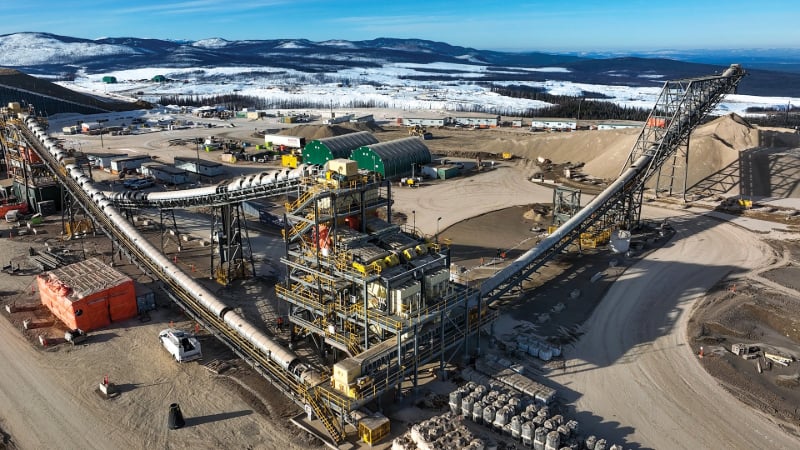
The Cariboo was the site of a gold rush in the 1850s and ’60s and continues to yield mineral wealth to this day. In fact, this year saw the first gold and silver pour at Artemis Gold’s Blackwater mine southwest of Prince George, creating more than 400 permanent jobs on-site. Also this year, Osisko Development obtained $450 million in financing to complete its Cariboo Gold Project near Wells, which is now expected to go into production in 2027 and operate for at least 16 years. The Gibraltar copper-molybdenum mine near Williams Lake, meanwhile, is the region’s largest private-sector employer with some 700 workers. In a vote of confidence for the local mining sector, multinational mining consultancy and service provider Metso Corp. announced the opening of a service centre in Prince George in 2024.
Though the forest industry has retrenched as a result of depleted timber supplies, trade action and low lumber prices, businesses that support cost efficiency and market diversification continue to prosper. Having acquired the Madill line of log loaders in 2023, DC Equipment commenced manufacturing the machines at a Prince George plant last year.
Also in 2024, the provincial government approved a $1.6-billion expansion to the University Hospital of Northern B.C. that will include an acute cardiac care unit. Expected to break ground in 2026, the new facilities will open in 2031.
Prince George continues to liven up its downtown with the opening of the Nanguz ’an Market, a cluster of retail outlets housed in brightly painted shipping containers at the Canada Games Plaza, next to the Prince George Conference and Civic Centre. Visitors can rent skates, bikes or fishing gear, shop for artisanal gifts, catch live performances and check out the visitor information centre all in one spot.
The fuels of the future

As in other regions, investment in renewable energy is ramping up. The Lheidli T’enneh Nation this year partnered with Spanish power producer Ecoener to develop a 140-megawatt wind farm in its territories at a cost of more than $400 million. Construction is scheduled to begin in 2029, backed by a 30-year power purchase agreement with BC Hydro.

“We’ve got a low-carbon energy sector developing in our region, which is very exciting,” says Deklan Corstanje, manager, economic development for the City of Prince George. The city is home to a renewable diesel refinery operated by Tidewater Renewables and this year Arbios Biotech opened a plant that converts forest waste into a renewable alternative to crude oil. Prince George is also helping lead a hydrogen hub centred on hydrogen production facilities proposed throughout the region. These plants are meant to supply a network of fuelling stations for the benefit of transport, logging and mining trucks across central and northern B.C. and into Alberta, and provide a clean feedstock for other fuel production.
“Our region is supported greatly by heavy industries,” Corstanje explains, “and if we can make a lower-carbon energy accessible to our local companies and thereby mitigate the impact of carbon taxes, our region becomes more economically sustainable.”